 Santorini Island Guide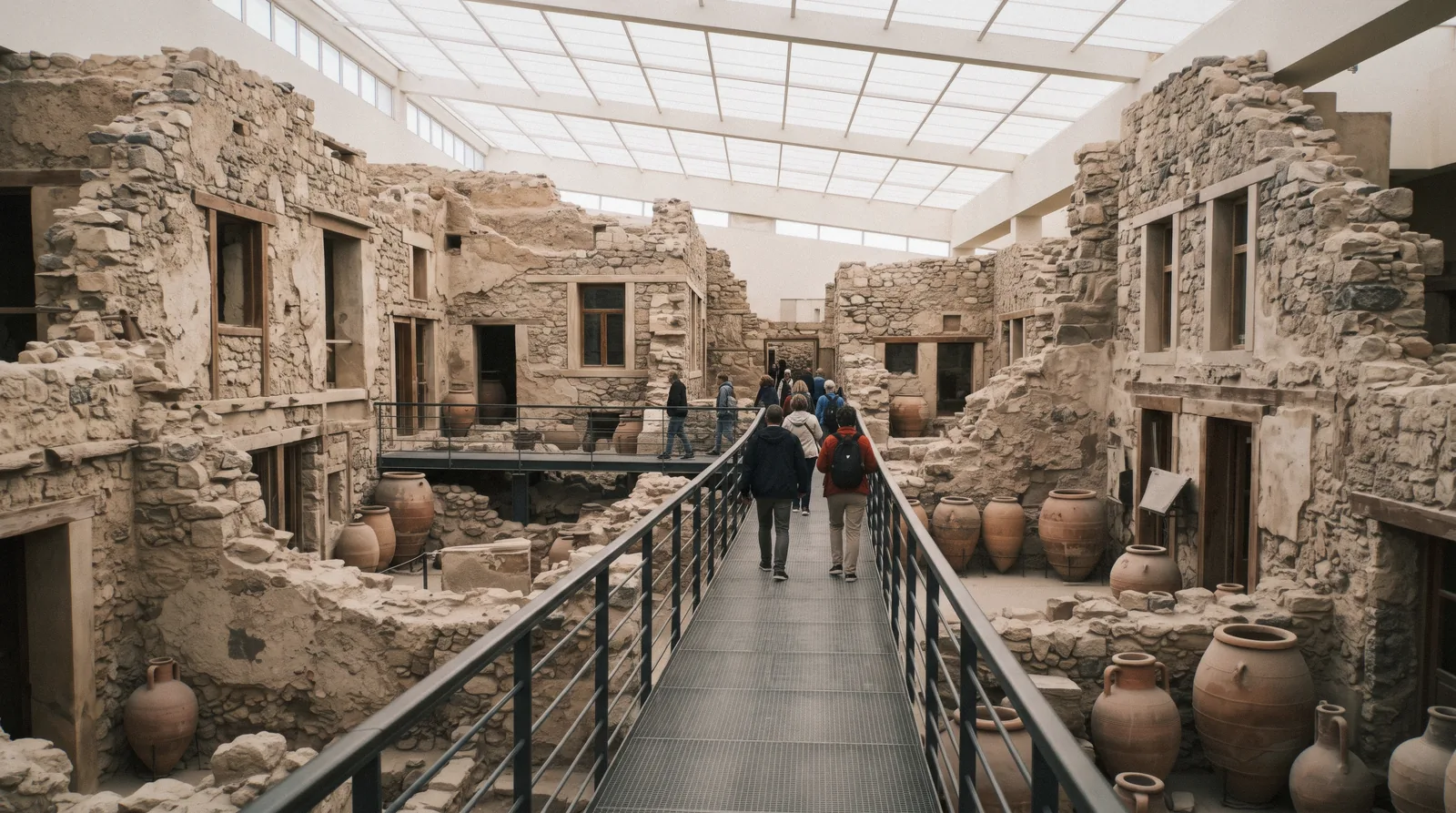
Akrotiri Santorini is the Bronze Age town buried under volcanic ash by the great Theran eruption, preserved the way Pompeii was preserved by Vesuvius. You walk on boardwalks through a roofed excavation, past the walls of three-storey houses with drainage pipes still in them. This page gives the hours, the prices, the guided options and the honest answer on how much time the site deserves. It is part of our Santorini, Greece travel guide.
Quick answer Akrotiri at a glance
Akrotiri is a Bronze Age town buried by the Theran eruption around 1600 BC and excavated under a protective roof since 1967. Entry is $22.40 (€20) and you need 60 to 75 minutes. It is worth visiting for anyone with the slightest interest in the island's story, and it sits minutes from Red Beach.
Key takeaways
- Entry is $22.40 (€20), reduced $11.19 (€10). Full options on our Akrotiri tickets page.
- Give it 60-75 minutes, then see Red Beach from the viewpoint above, since the land path is closed.
- The easiest way to reach it without a car is the KTEL bus from Fira at $2.46 (€2.20). See getting around Santorini.
- For context afterwards, the frescoes' best pieces are in the Museum of Prehistoric Thera in Fira.
Key facts
Opening hours
| Mon and Thu, all year | 08:30–15:30 |
|---|---|
| Other days, Apr-Aug | 08:00–20:00 |
| Other days, Sep-Oct | 08:00–18:00 (steps down through the month) |
| Other days, Nov-Mar | 08:30–15:30, Tuesday closed |
Closed 1 Jan, 25 Mar, 1 May, Easter Sunday, 25-26 Dec. Tuesday closed in winter.
Admission
- Adult
- $22.40 (€20)
- Reduced
- $11.19 (€10)
- Free
- 6 March, 18 April, 18 May, last weekend of September, 28 October, and the first and third Sunday from November to March
Planning it
- Time needed
- Not stated officially. Our routing: 60-75 minutes for the boardwalk circuit, longer with a guide
- Book ahead
- Recommended — a few days
- Address
- Akrotiri excavation site, Akrotiri, Santorini 847 03, Greece
Akrotiri tickets compared
Every way to get inside the Akrotiri archaeological site: our own tickets and guided walks on one side, the official counter price on the other, with what each includes and how long it lasts.
Do you want the walls explained while you stand in front of them, or are you happy reading panels and doing it at your own pace?
| Option | Price | Length | Includes | Book |
|---|---|---|---|---|
| Akrotiri Ticket with Optional Self-Guided AudiosIndependent visitors who want the entry ticket plus optional audio, no guide | $29.15 | 1 day | Entry ticket with optional self-guided audio on your phone | Check Availability |
| Experience Akrotiri with a Licensed Tour GuideVisitors who want a licensed guide and entry handled for them, private party | $188.52 | 75 minutes | Private guided walk of the excavation, entry included | Check Availability |
| Santorini Day Tour: Akrotiri, Villages, Wine and Sunset in OiaVisitors who want Akrotiri plus the villages, wine and the Oia sunset in one day | $67.50 | 10 hours | Bus with a licensed archaeologist in Akrotiri, Emporio, Pyrgos, beach stop and Oia sunset. Entrance fee paid on top | Check Availability |
There is no official combined ticket for Akrotiri plus the Fira museums in 2026 despite what older blogs say. Figures current in Q4 2026.
Sites No Tour Sells: The Official Tickets
These sites sell their own tickets at the gate or on the official ticketing site, and no tour on this page sells the entry. Prices are the official ones.
| Option | Price | Length | Includes |
|---|---|---|---|
| Official site ticket at the counter | $22.40 (€20) adult, $11.19 (€10) reduced | At your own pace | Site entry only, reduced fare for eligible categories |
Our Akrotiri and island tours
Tickets and tours that include Akrotiri or start at its gate, from a plain entry pass to a full island day.
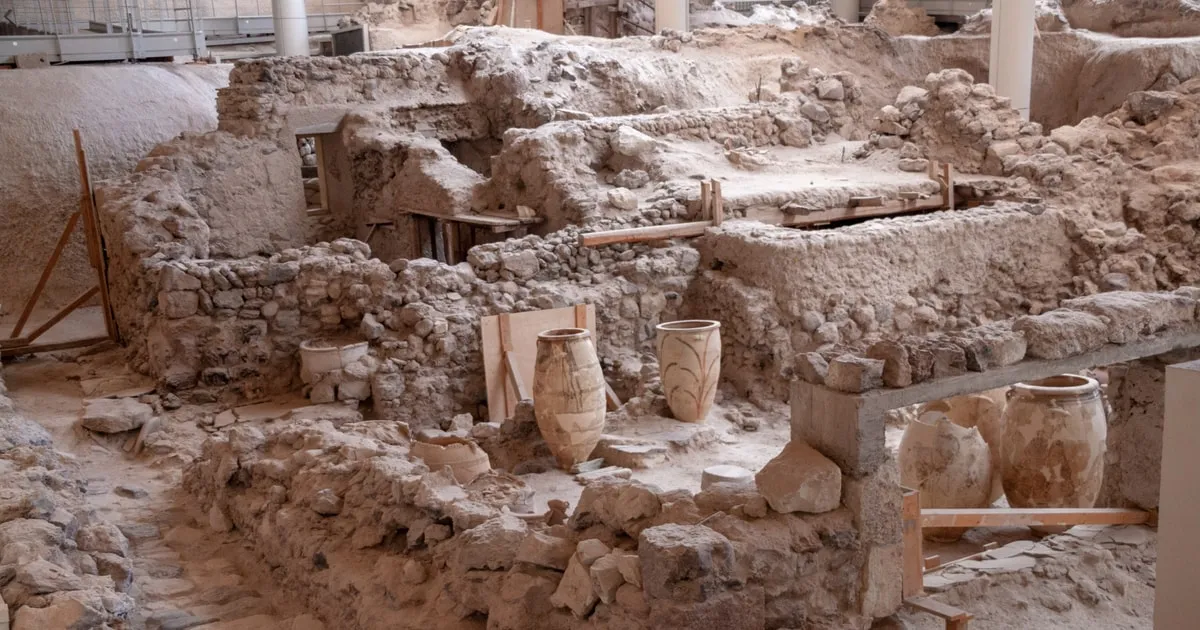 from $29.15
Akrotiri Ticket with Optional Self-Guided Audios
The plain Akrotiri entry ticket with optional self-guided audio on your phone, for walking the excavation at your own pace.
Check Availability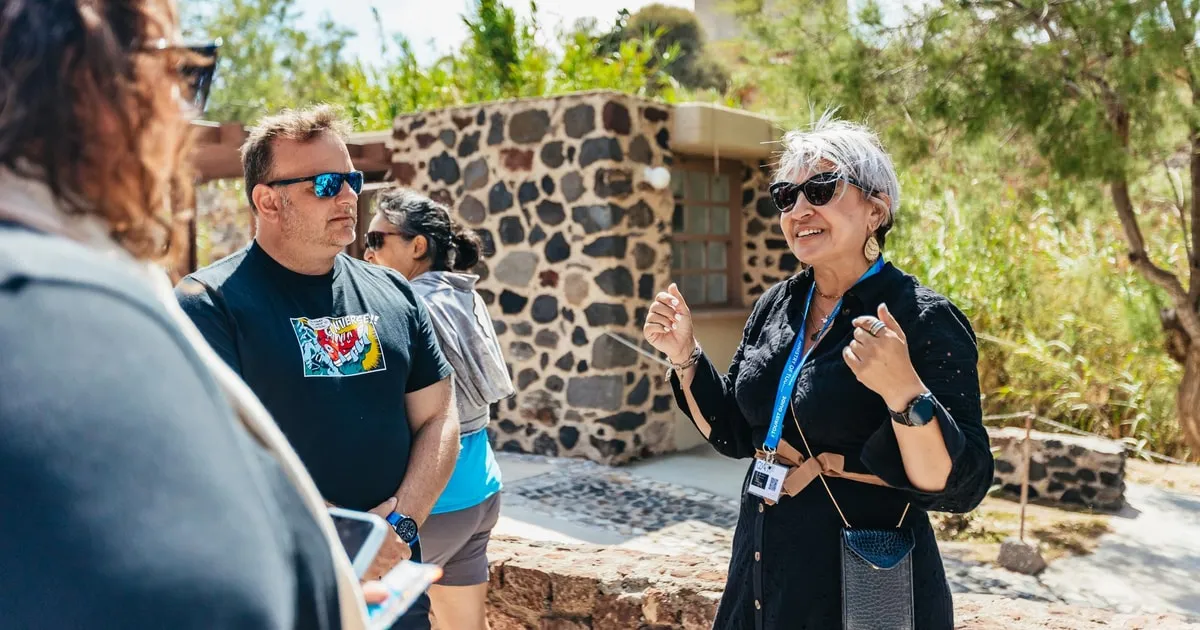 from $188.52
Experience Akrotiri with a Licensed Tour Guide
A private 75-minute walk through Akrotiri with a licensed guide, entry handled for you.
Check Availability from $67.50
Santorini Day Tour: Akrotiri, Villages, Wine and Sunset in Oia
The full-day bus tour: Akrotiri with a licensed archaeologist, the black beach, Emporio, Pyrgos and the Oia sunset. The $22.57 added at checkout is the Akrotiri entrance fee (€20).
Check Availability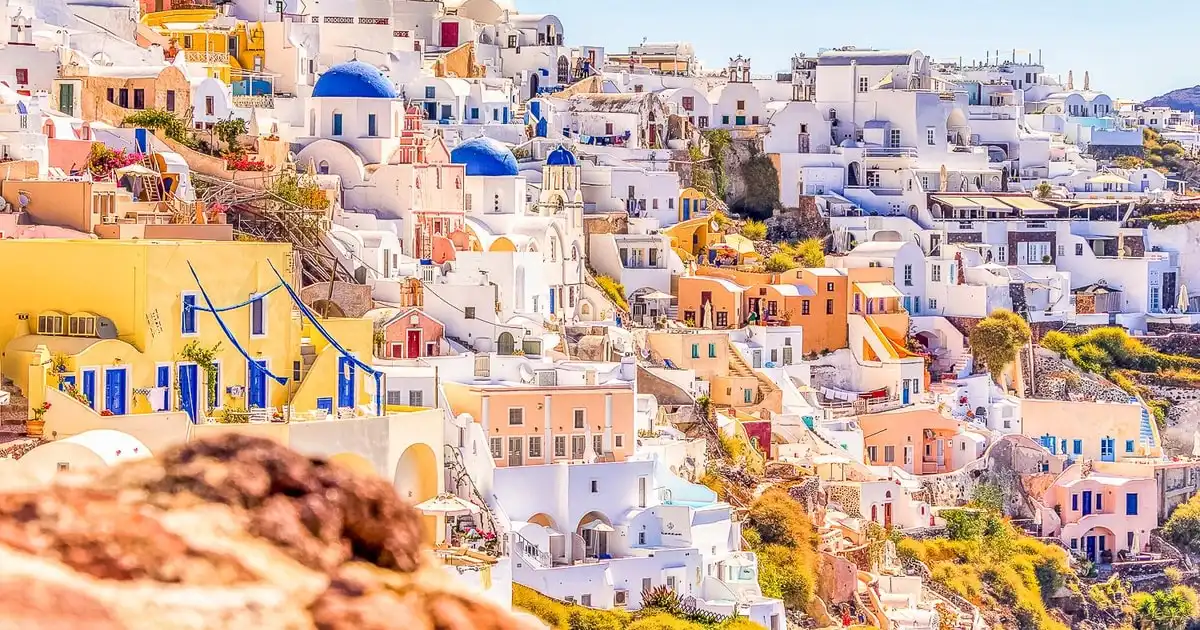 from $58.02
Top Sights Day Trip, Wine Tasting, & Oia Sunset
A nine-hour coach day: the top sights, a winery stop and the Oia sunset, with pick-up and a private option.
Check Availability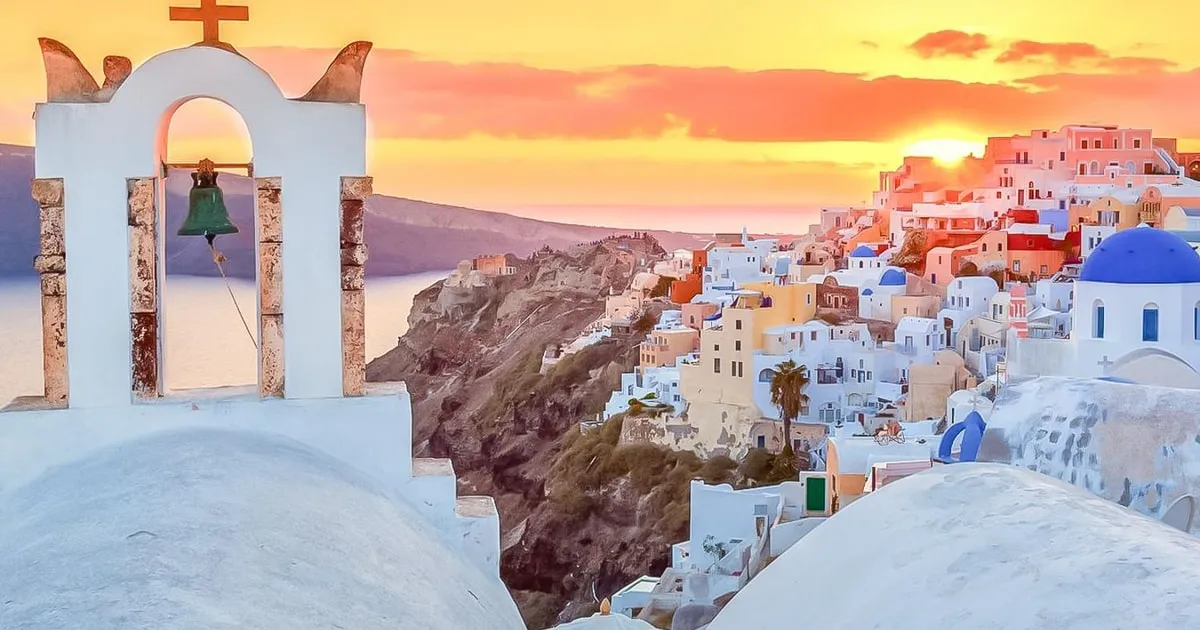 from $59.53
Traditional Sightseeing Bus Tour with Oia Sunset
The classic sightseeing bus day with the Oia sunset, ten hours with pick-up.
Check AvailabilityPrices, ratings and details are the platform's own. dollar figures are the listed prices — the platform bills in your account's currency.
What Akrotiri is and what happened to it
The short version of why a hillside on a Greek island hides a city, told in four paragraphs you can read before you go.
A town at the south of the island, buried in ash
Akrotiri was a prosperous Aegean port town on the southern shore of the island, living from trade, wine and its position on sea routes. Around 1600 BC the Theran eruption, one of the largest volcanic events in human history, buried the whole settlement under metres of volcanic ash. The ash sealed the buildings just as the eruption sealed them, which is why wall plaster, staircases and drainage pipes survived. There are no unburied human remains and only a single gold object, a golden goat found in 1999. The clear conclusion is that the inhabitants read the warning signs, earthquakes in the weeks before the eruption, and evacuated by sea.
That evacuation is what makes the site strange and moving. You are not looking at a battlefield or a tragedy. You are looking at a town that was emptied first and destroyed after.
From Marinatos to today
The Akrotiri excavations began in 1967 under Spyridon Marinatos, who guessed, correctly, that a Minoan-era town lay under the ash here. Work continued after his death under Christos Doumas and continues today. What has come out is a planned town with paved streets, squares, multi-storey houses and an indoor plumbing system, evidence of a society far more organised than most people expect from the Bronze Age.
The famous wall paintings found here, the spring frescoes, the fisherman, the fleet scene, are not on site. They are in the National Archaeological Museum in Athens and in the Museum of Prehistoric Thera in Fira. Plan a museum hour in Fira to see what was actually found in the rooms you just walked through.
In 2005 the old lightweight roof being built over the site collapsed before completion, killing one visitor, and the site stayed closed until April 2012. The current bioclimatic roof is the structure you walk under, and it is part of the visit. See also our blog post on the Minoan eruption.
What you actually see inside
Set expectations correctly. Akrotiri is a shell of a town under a big roof, and knowing what to look at changes the experience completely.
The boardwalk circuit
You enter through the modern building, walk up to the roof level for the overview of the whole excavation, and then descend onto a raised boardwalk that threads between the building shells. You cannot enter any of the rooms. Everything is seen from walkways with interpretive panels. The site is fully covered, so weather is never a factor, and the circuit is flat and manageable.
What you are looking at: building facades two storeys high standing free, drainage pipes running through the walls, door and window frames preserved in plaster, and the rich houses at the crossroads where the frescoes were found. Names on the panels, like the House of the Ladies or the West House, mark buildings named after the paintings recovered inside them. The paintings themselves are not here, which is the single most common surprise for visitors.
How to make the walls mean something
Unprepared, the site reads as an abstract field of walls. Prepared, it reads as a street you can almost walk into. Three things to fix in mind before you go. First, the height. The town had upper floors and staircases, so the standing walls are not low ruins, they are the ground and first floors of real houses. Second, the services. Sewers and clay pipes inside the walls are visible, a sign of town-scale organisation. Third, the emptiness. Everything portable and everyone left before the ash fell, which is why you see architecture and not artefacts.
If that sounds dry, that is the honest signal to take a guide. A licensed guide, as on Experience Akrotiri with a Licensed Tour Guide, turns the shells into rooms and the pipes into a story, in 75 focused minutes. Our pick for a first visit, and worth the money for anyone travelling with teenagers. For the finds, pair the site with the Museum of Prehistoric Thera.
Hours, tickets and the quiet slots
The official timetable is more complicated than most attraction pages admit, and the quiet hours depend on it.
The timetable that matters
Mondays and Thursdays the site closes at 15:30 all year. On the other days it stays open late in the warm months: 08:00 to 20:00 from April to August, stepping down through September and October to 18:00 by the end of October, and back to 08:30 to 15:30 in winter, with Tuesday closed from November to March. Last entry is 20 minutes before closing. The site closes fully on 1 January, 25 March, 1 May, Easter Sunday and 25 and 26 December.
Free admission days exist and are worth knowing: 6 March, 18 April, 18 May, the last weekend of September, 28 October, and the first and third Sunday of each month from November to March. On free days expect queues. Admission is $22.40 (€20) adult and $11.19 (€10) reduced, and there is no official combined ticket with the Fira museums despite blogs claiming one. Our Akrotiri tickets page lists every option.
When it is quiet
The site has two narrow entrances: the 08:00 opening and the final 90 minutes before closing, when tour groups have gone to lunch or dinner. Our estimate is that the 08:00 to 09:30 window in summer and the last hour in September and October are the calmest, with the boardwalk thin enough to read panels without waiting. Midday in high season is the worst slot, and by a wide margin.
A trick built into the timetable itself: Mondays and Thursdays close at 15:30, so coach tours schedule Akrotiri early on those days and move on. In our experience mid-afternoon on a Monday or Thursday, in the 14:00 to 15:00 slot, is reliably calm outside August. Avoid free-admission days if you want space, and check best time to visit Santorini for the seasonal picture.
Getting to Akrotiri
The site sits at the far southwest of the island. Buses reach it from Fira, and cars and tours reach it from anywhere.
By bus, car or tour
The KTEL bus runs from Fira bus station to Akrotiri village and beach for $2.46 (€2.20), with a reduced fare of $1.23 (€1.10). The timetable is seasonal and published only as a PDF on the KTEL site, so check it the day before rather than trusting an old screenshot. From the Akrotiri stop it is a short walk into the village to the site entrance. Pay the conductor on board.
A rental car or quad gives you freedom to chain the site with Red Beach, the lighthouse and Vlychada in one south-coast loop, and the parking by the site is straightforward. Compare options on our Santorini car rental page. If you would rather not think about transport at all, a tour does the driving and the explaining together. Santorini Day Tour: Akrotiri, Villages, Wine and Sunset in Oia covers the site with a licensed archaeologist and finishes with the Oia sunset. Cruise passengers short on time should read our Santorini cruise port page first, since tender hours decide everything. taxis and transfers are covered in getting around Santorini.
How much time to give Akrotiri, three ways
The honest answer depends on how you visit. Three routings, with what each costs and what it buys you.
Three routings compared
Walk in with a guidebook alone and the site can read as walls and jars. Walk in with a guide and you will need 90. The middle route, the plain ticket plus the self-guided audio, is what we recommend to most independent visitors.
Add travel time on top: roughly an hour each way by bus from Fira in our estimate, or 20 minutes by car. If Akrotiri is your whole morning, the full south loop, site, Red Beach viewpoint, Akrotiri lighthouse and a swim at Vlychada, fills a satisfying day. Our full itineraries slot it on day two of the Santorini in 2 days plan.
| Routing | Cost per person | Time on site | Best for |
|---|---|---|---|
| Official ticket at the counter | $22.40 (€20) | 45-60 minutes | Visitors on a tight schedule or a free-admission day |
| Ticket plus self-guided audio | $29.15 | 60-75 minutes | Independent visitors who want context without a group |
| Private licensed guide | $188.52 | 75 minutes plus | Anyone who wants the site fully unpacked, families included |
Akrotiri in time
Eight dated steps from the living town to the excavation you can walk today.
-
Before c. 1600 BC
A port town grows
Akrotiri develops as an Aegean trading town with multi-storey houses, paved streets and drainage.
-
c. 1600 BC
Earthquakes, then evacuation
The town is emptied of people and portable goods before the eruption, leaving no unburied human remains and one gold object found to date.
-
c. 1600 BC
The Theran eruption buries the town
A VEI 7 eruption with 28-41 cubic km of material buries Akrotiri in ash, one of the largest volcanic events in human history.
-
1866
First hints from the quarry
Ash quarries and eruption studies of the Kameni eruptions prompt the first antiquarian interest in the buried area.
-
1967
Spyridon Marinatos begins the excavation
Systematic digging starts and reveals the prehistoric town under the ash.
-
1999
The golden goat is found
A single gold object emerges from the site, evidence of the evacuation before the eruption.
-
2005
Roof collapse closes the site
A new protective roof collapses before completion, killing one visitor, and the site closes.
-
2012
Reopening under the new roof
The site reopens in April under the bioclimatic shelter that covers today's visit.
Sources: Ephorate of Antiquities of Cyclades pages, Hellenic Heritage ticketing, Wikipedia summary of the excavation history.
Dos and don'ts at Akrotiri
Do
- Go at 08:00 in summer or in the last 90 minutes before closing for empty boardwalks
- Buy the ticket with audio or take a guide, the bare walls need narration
- Pair the visit with the Museum of Prehistoric Thera in Fira where the frescoes' story is displayed
- Check the timetable: Monday and Thursday close at 15:30, winter Tuesday is closed
- Wear shoes you can stand and walk in, the circuit is flat but you are on your feet
- Build in Red Beach from the viewpoint and the Akrotiri lighthouse afterwards
Don't
- Do not expect frescoes on site, the wall paintings are in Athens and in Fira's museums
- Do not touch or lean on the ancient plaster, it is original fabric
- Do not trust blogs that mention a combined archaeological ticket, none is sold in 2026
- Do not attempt the land path down to Red Beach, it is closed by the municipality for rockfall
- Do not arrive after last entry, 20 minutes before closing, they turn you away
- Do not plan Akrotiri on a winter Tuesday, the site is closed
Five things most visitors do not know
Small facts that change how you read the site, each one checked against the record.
The list
Akrotiri rewards background knowledge more than any other site on the island. These are the facts we wish every visitor carried through the gate.
- The town was evacuated before the eruption. Only one gold object, a golden goat found in 1999, and no unburied human remains have ever been found, so you are walking through an emptied town, not a tragedy site. Ephorate and Wikipedia summaries
- The excavation has run since 1967. Spyridon Marinatos opened the dig, Christos Doumas continued it, and work goes on today under the shelter you visit. Ephorate history
- The frescoes are not here. The wall paintings from these rooms are in the National Archaeological Museum in Athens and in the Museum of Prehistoric Thera in Fira, so the site and the museum are halves of one visit. Ephorate, Museum of Prehistoric Thera
- The site was closed for seven years this century. The old roof collapsed in 2005, killing one visitor, and the site reopened only in April 2012 under the current roof. Wikipedia
- There is no combined ticket in 2026. The old 15 euro bundle with Ancient Thera and the museums appears on blogs but no official page lists it, so budget each entry separately. Hellenic Heritage ticketing
Akrotiri and the south-west corner
The site and the places within a short drive of it, on one map.
- 1 Akrotiri archaeological siteThe Bronze Age town under the bioclimatic roof, this page's subject.
- 2 Red BeachThe iron-red cove below the excavation, reachable now only by boat since the land path is closed for rockfall.
- 3 Akrotiri lighthouseA 19th century lighthouse on the island's southwest tip and a quiet sunset spot.
- 4 Vlychada beach and marinaMoon-grey cliffs, a proper swimming beach and the departure point for many boat tours.
- 5 MegalochoriA bell-lined village of wineries and quiet lanes on the road between Fira and Akrotiri.
- 6 EmporioThe island's largest village, with a fortified hilltop quarter worth an hour.
Numbers match the pins on the map.
Near Akrotiri
Three things to build around the site, all within a short drive.
Red Beach viewpoint
The red cove sits directly below the excavation on the coast. The land path is closed by the municipality for rockfall, so see it from the viewpoint above or from a boat, as our Red Beach guide explains.
About 5 minutes by car from the site (our estimate) Read the guideAkrotiri lighthouse
One of the oldest lighthouses in Greece stands on the headland at the island's southwest tip. It is a calm sunset alternative to the Oia crowds.
About 10 minutes by car (our estimate) Read the guideVlychada beach
Wind-carved cliffs and dark sand make this the best swimming finish to a south-coast day. Boat tours, including catamaran cruises, leave from its marina.
About 15 minutes by car (our estimate) Read the guideAkrotiri questions
Where exactly is Akrotiri on Santorini?
Akrotiri is on the island's southern coast, southwest of Fira, at the far end of the road towards the lighthouse. The bus from Fira costs $2.46 (€2.20) and the site sits a short walk from the Akrotiri village stop. It shares its corner of the island with Red Beach and the lighthouse.
Is it worth visiting Akrotiri?
Yes, if you give it context. Unprepared, the roofed excavation reads as abstract walls in 40 minutes. With a guide or audio, and paired with the Museum of Prehistoric Thera where the frescoes are shown, it becomes the most meaningful hour of history on the island. It is covered, so heat and weather never spoil it.
What happened to Akrotiri?
The town was buried by the Theran eruption around 1600 BC, one of the largest volcanic events in human history. The inhabitants evacuated before the eruption, which is why no unburied human remains and only a single gold object have been found. The ash sealed and preserved the buildings until excavation began in 1967. More detail in our Minoan eruption post.
How much does Akrotiri cost in 2026?
The official counter ticket is $22.40 (€20) for adults and $11.19 (€10) reduced. The ticket with self-guided audio costs $29.15. There is no official combined ticket with the Fira museums in 2026, whatever older blogs claim. Full comparisons are on our Akrotiri tickets page.
How long do you need at Akrotiri?
Plan 45 to 60 minutes with the plain ticket, 60 to 75 with audio, and about 75 minutes plus waiting for a private guided walk. Add an hour each way from Fira by bus in our estimate. See our routing table for the three ways to do it.
Can you visit Akrotiri and Red Beach on the same day?
Is Akrotiri open on Mondays and Thursdays?
Yes, but those days close at 15:30 all year while other days run to 20:00 in summer. Last entry is 20 minutes before closing. The site shuts completely on 1 January, 25 March, 1 May, Easter Sunday and 25 and 26 December, and on winter Tuesdays.
Where Akrotiri fits in a day
A south-coast day that puts the site in the calm of the morning and saves the light for the end.
Our recommended routing
Start at the site for opening, when the boardwalks are emptiest and the roof keeps the heat off. Give it 75 minutes with audio. Then drive five minutes to the Red Beach viewpoint for the look from above, since the path down is closed. Coffee in Megalochori on the way back inland, whose bell-lined lanes are the prettiest quarter-hour of any Santorini village.
Lunch in Megalochori or Emporio, then the afternoon is yours: a swim at Vlychada or a boat from its marina past the south coast cliffs. End at the Akrotiri lighthouse or drive north for the Oia sunset if you want the classic. The whole loop is our favourite single day on the island and slots into the Santorini in 3 days itinerary.
If you would rather hand the driving to someone else, the full-day options in our tickets table do this loop as a route. For more ideas beyond this corner, browse the full list of things to do in Santorini and our other day trips.
Akrotiri On Video
Three videos that show the place before you go.
This Ancient Greek Town Suffered the Same Fate as Pompeii 🌋 Island Odyssey | Smithsonian Channel
This Ancient Greek Town Suffered the Same Fate as Pompeii 🌋 Island Odyssey | Smithsonian Channel, from Smithsonian Channel.
Video: Smithsonian ChannelWhat is in Akrotiri, Santorini? | History, Archaeological Site, Prehistoric Museum Documentary | 4K
What is in Akrotiri, Santorini? | History, Archaeological Site, Prehistoric Museum Documentary | 4K, from History Victorum.
Video: History Victorum[Greece] Santorini I 🌅 Perissa Beach, Akrotiri, 🍷Wine Tasting, Emporio Village, Santorini Restaurant
[Greece] Santorini I 🌅 Perissa Beach, Akrotiri, 🍷Wine Tasting, Emporio Village, Santorini Restaurant, from Love, Sam.
Video: Love, SamVideos load from YouTube only when you press play.
Prices, hours and terms are set by the venue or operator and confirmed at checkout.
We may earn a commission if you book through one of our links, at no extra cost to you. Full affiliate disclosure