 Santorini Island Guide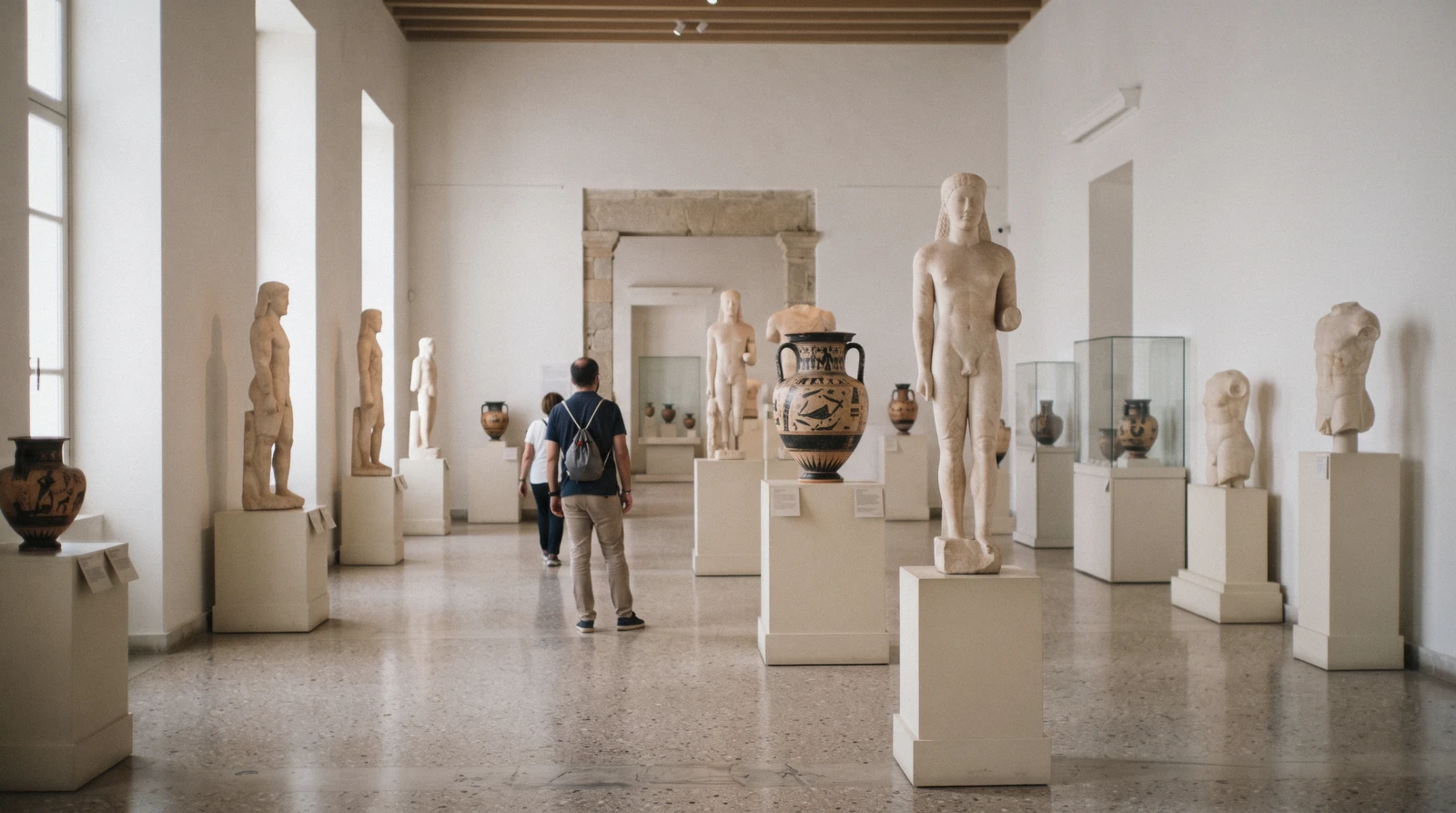
The archaeological museum of Thera sits in the centre of Fira and holds the sculpture, inscriptions and pottery that came out of the ancient cemeteries and sanctuaries of the island, from the Dorian city on Mesa Vouno and earlier. It is the small, classical counterpart to the museum of prehistoric Thera two minutes away, and admission is $11.19 (€10). It is part of our Santorini, Greece travel guide.
Quick answer The short version
The archaeological museum of Thera is the state museum in Fira for the island's ancient city of Thera, with sculpture, inscriptions and pottery from the Geometric to the Roman period. It opens 08:30-15:30 daily, with Saturday running 09:00-21:00. Admission is $11.19 (€10) and no advance booking is stated, so you simply walk in.
Key facts
Opening hours
| All year | 08:30–15:30 |
|---|
Admission
- Adult
- $11.19 (€10)
- Reduced
- $5.59 (€5)
- Free
- Free-admission days for state sites are listed by the ministry but this museum's own list is not stated
Planning it
- Time needed
- Not stated officially. Our routing: 45 minutes to 1 hour
- Book ahead
- Optional — walk-up usually fine
- Address
- Fira town centre, Santorini (street address not stated)
Tickets for the Archaeological Museum of Thera
We compare every way to get into the museum and the sites that surround it, with prices from the official Ephorate listing and from the tour cards we sell on this page.
Do you want the museum alone, or the whole island story in one day?
| Option | Price | Length | Includes | Book |
|---|---|---|---|---|
| Official entry ticket, bought at the doorAnyone visiting the museum on its own | $11.19 (€10) adult, $5.59 (€5) reduced | About 45-60 minutes | Full collection access, no booking needed | Official site |
We sell no tour that covers this museum's entry, so the door ticket is the honest option. A combined archaeological ticket is sometimes reported on blogs, but no official page lists one. Figures current in Q4 2026.
Guided days that can include Fira's museums
These tours do not sell the museum entry, but they put you in Fira or cover the island's other ancient sites on a guided day.
 from $58.02
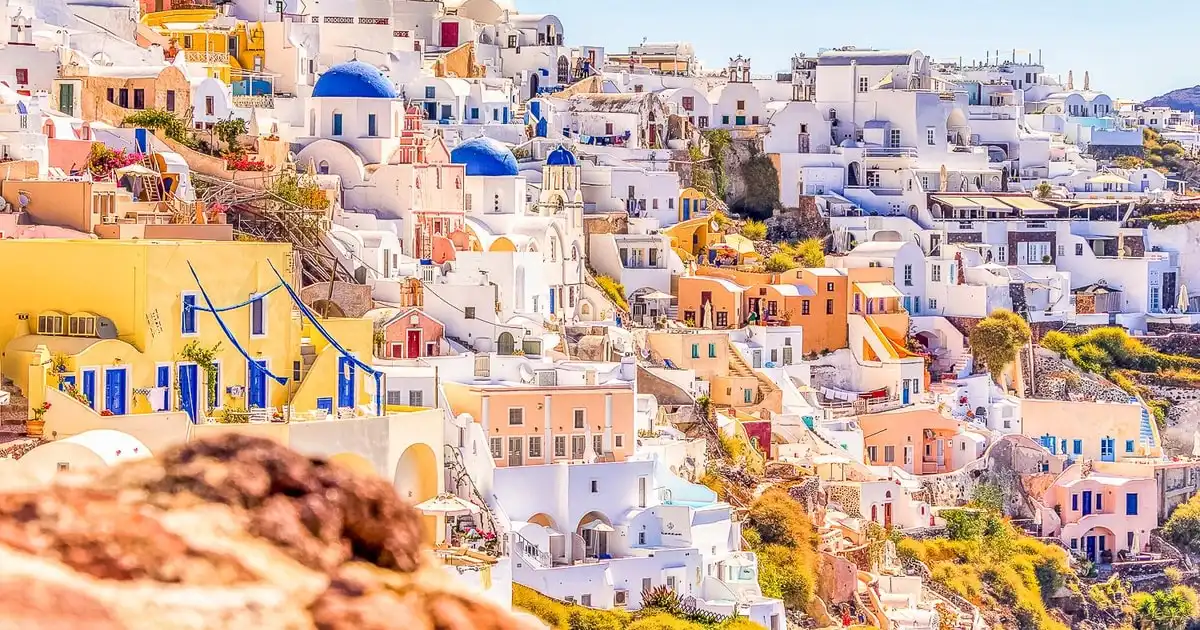
Top Sights Day Trip, Wine Tasting, & Oia Sunset
A nine-hour coach day: the top sights, a winery stop and the Oia sunset, with pick-up and a private option.
Check Availability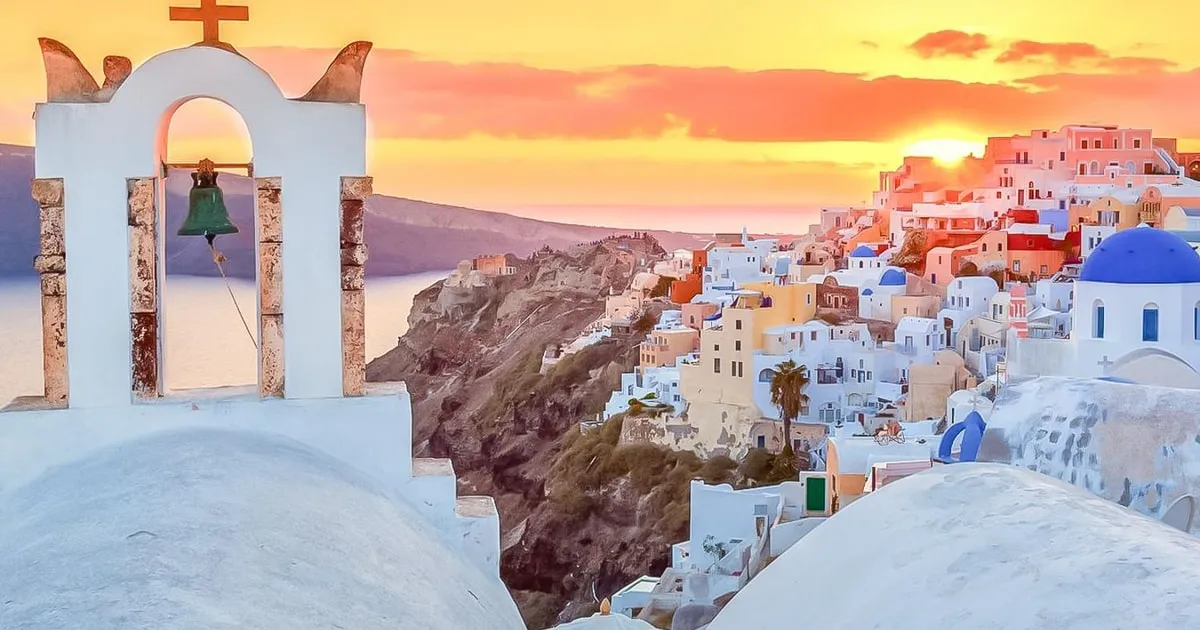 from $59.53
Traditional Sightseeing Bus Tour with Oia Sunset
The classic sightseeing bus day with the Oia sunset, ten hours with pick-up.
Check Availability from $67.50
Santorini Day Tour: Akrotiri, Villages, Wine and Sunset in Oia
The full-day bus tour: Akrotiri with a licensed archaeologist, the black beach, Emporio, Pyrgos and the Oia sunset. The $22.57 added at checkout is the Akrotiri entrance fee (€20).
Check Availability from $62.92
Santorini Highlights Small-Group Tour with Wine Tasting option
A highlights tour in a small group: Oia, the Profitis Ilias viewpoint and the villages. The listing adds $22.57 at checkout and excludes the €20 wine tasting and the Akrotiri entrance.
Check Availability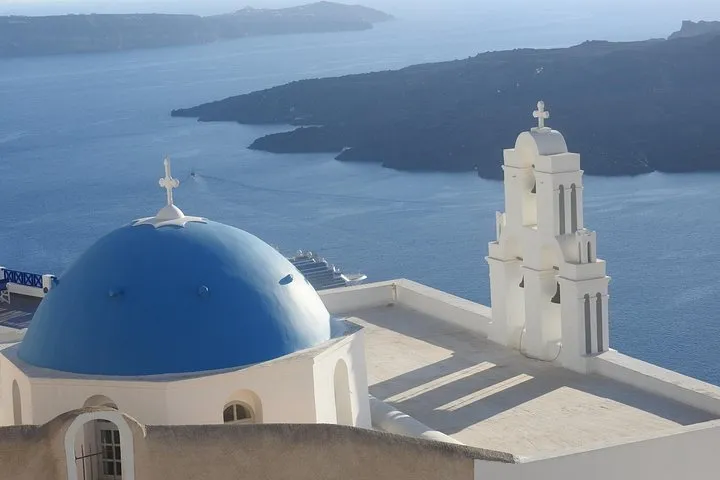 from $66.93
Santorini Half-Day Small Group Tour: Villages, Oia, Caldera Views
A half-day small group of up to 18: Profitis Ilias for the island view, Megalochori, the Firostefani blue dome and Imerovigli, with hotel pick-up.
Check Availability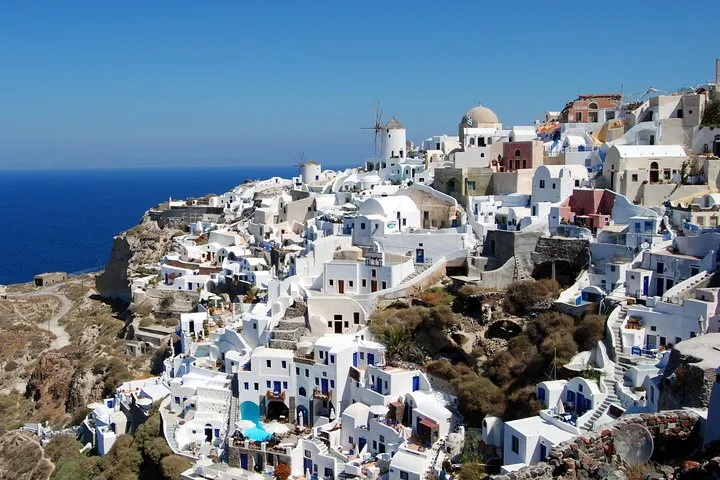 from $102.97
Santorini Full Day Tour: Fira, Oia Sunset & Beach (Small Group)
A full day in a minivan: Fira, the villages, a beach stop and the Oia sunset, for up to 18 guests with hotel pick-up. Food and drinks are on you.
Check Availability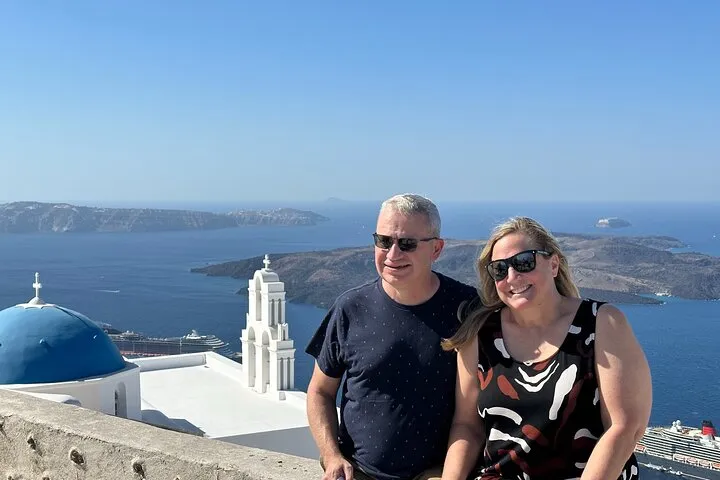 from $65.38
Santorini's Iconic Villages: Oia, Imerovigli & Firostefani
A three-hour minibus loop through Firostefani, Imerovigli and Oia with free time in Oia, built around cruise-ship hours. The €10 cable car is not included.
Check Availability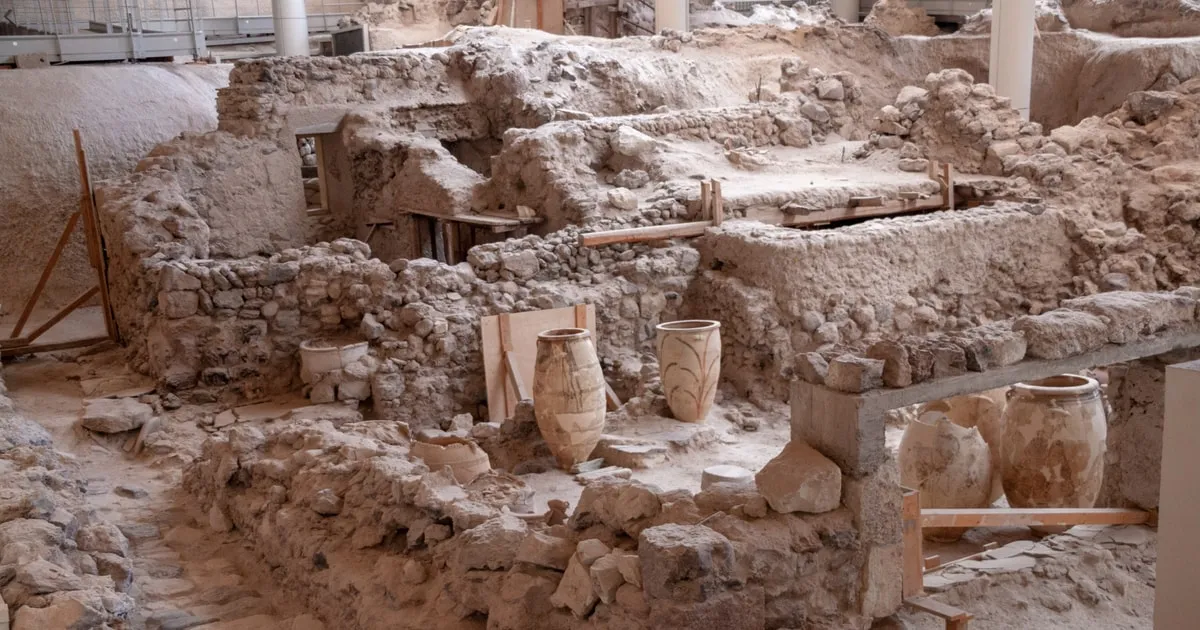 from $29.15
Akrotiri Ticket with Optional Self-Guided Audios
The plain Akrotiri entry ticket with optional self-guided audio on your phone, for walking the excavation at your own pace.
Check Availability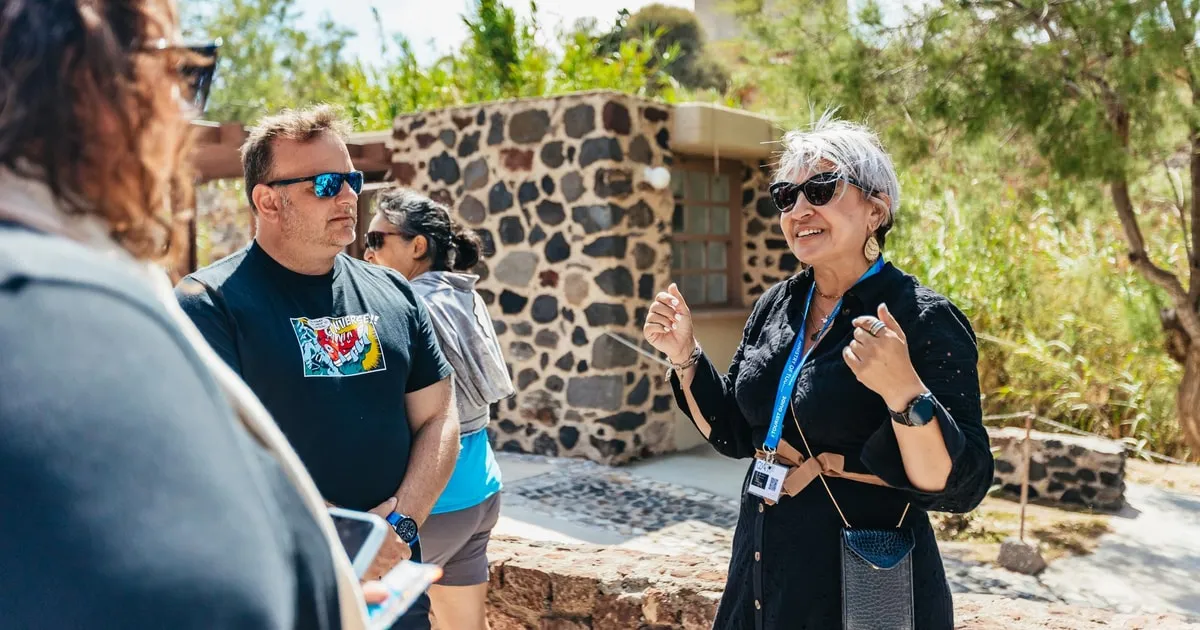 from $188.52
Experience Akrotiri with a Licensed Tour Guide
A private 75-minute walk through Akrotiri with a licensed guide, entry handled for you.
Check AvailabilityPrices, ratings and details are the platform's own. dollar figures are the listed prices — the platform bills in your account's currency.
What the Archaeological Museum of Thera actually is
Two museums in Fira carry the island's past, and they are easy to confuse. This one covers the ancient city of Thera, not the Bronze Age town of Akrotiri.
Thera, not Akrotiri
The archaeological museum of Thera collects finds from the ancient city of Thera, the Dorian settlement founded in the 9th century BC on the Mesa Vouno ridge above Kamari and Perissa. Its rooms hold sculpture, inscriptions, pottery and small finds from the city's cemeteries and sanctuaries, running from the Geometric period through Hellenistic and Roman times.
The confusion is understandable. The Bronze Age town buried by the eruption around 1600 BC is Akrotiri, and its frescoes and pottery live in the museum of prehistoric Thera a short walk away, with more material in the National Archaeological Museum in Athens. If you want the eruption story, that is the prehistoric museum and the Akrotiri excavation itself. If you want the classical city whose ruins you can still climb to, this is your museum.
The practical line: the two museums are minutes apart in Fira, the ticket is the same $11.19 (€10) at each, and neither needs a booking. Do them back to back in one morning and you have the whole island's history under one roof.
Why the collection matters
Santorini's written history starts with Thera. The Dorian city on Mesa Vouno was excavated between 1895 and 1904 by Hiller von Gaertringen, and the objects that came out of its graves and temples form the core of this collection. Inscriptions from the city record decrees and names that anchor the island in the wider Greek world.
For most visitors the museum works as a companion piece to a climb up Ancient Thera. The ridge site is spectacular but bare. Seeing the sculpture, votive offerings and pottery in the cases first gives the walls up there meaning, and costs the same $11.19 (€10) admission as the site itself.
Our pick: if you only have one museum slot in Fira and you care about the eruption, choose the prehistoric museum. If you plan to walk Mesa Vouno, or you have already seen Akrotiri, choose this one. Doing both takes about two hours and covers every era the island offers.
What you see inside
The museum is compact. Know the highlights before you walk in and forty-five minutes is plenty.
The rooms and their finds
The galleries run roughly in order, from the early Iron Age material through the archaic and classical sculpture to Roman-era pieces. Expect kouroi and other funerary sculpture from the city's cemeteries, votive offerings from its sanctuaries, and a solid run of inscribed stone that archaeologists prize more than casual visitors do.
Ceramic cases trace everyday life in the ancient city, and the labels place each find in its sanctuary, cemetery or building on Mesa Vouno. That mapping is the real value of the visit. You stand in front of an object, read where it was found, and can then picture the exact slope or terrace when you later look up at the ridge from Kamari beach.
There is no café or shop of note, and photography rules follow standard state-museum practice. The building is small enough that you cannot get lost, and rooms are air-conditioned in summer, which makes it a useful midday stop when the caldera path is baking. Pair it with the three bells of Fira photo stop and the caldera view on the way out.
Reading it in under an hour
Start at the earliest material and work forward. The early pieces explain who settled the island after the eruption emptied it, and the sculpture halls show the city at its richest. If a case holds inscriptions, skim for the dates rather than the Greek. The labels do the work in English.
Budget roughly twenty minutes per floor-set, then leave time for the one or two pieces that stop you. Our estimate for a serious visit is 45 to 60 minutes, and an unhurried visitor with a guidebook could stretch it to 90. Anything less than half an hour and you are really just cooling off, which is also legitimate in August.
The decision to make is sequencing. Visit here first, then the prehistoric museum, then Akrotiri on another day, and the island reads chronologically. Do Akrotiri first and this museum can feel like a footnote, so reverse it if the Bronze Age is your priority.
Opening hours, tickets and the quiet slots
State-museum hours here are short and seasonal in feel. Plan around the 15:30 closing or use Saturday.
Hours and when to go
The museum opens 08:30 to 15:30, with Saturday extended to 09:00-21:00. That long Saturday evening is the odd one out and the best slot on the island for after-dinner culture, though our estimate is that most visitors still have not noticed it.
On weekdays, arrive at 08:30 or after 14:00. Tour groups work through Fira mid-morning and early afternoon, and the small galleries fill quickly. Closing is strict at 15:30, so a visit needs to start by about 14:30 at the latest for the full circuit.
Tuesday matters for planning. The museum of prehistoric Thera closes on Tuesdays, which pushes its visitors here, so expect slightly fuller rooms. Neither museum's closed days beyond the standard state holidays are stated on the Ephorate page, so confirm on the official listing in winter, when Greek state museums sometimes reduce hours.
Paying and combining tickets
Admission is $11.19 (€10) for adults and $5.59 (€5) at the reduced rate. You buy at the desk. No online booking requirement is stated for this museum, unlike the Akrotiri tickets situation in high summer where the big site rewards planning.
No combined ticket covering the Fira museums and the archaeological sites appears on any official page, whatever older blogs claim. Treat each entry as a separate purchase. If you are ticking off all four state sites, the Akrotiri entry at $22.40 (€20) is the expensive one and the three Fira-and-Mesa-Vouno tickets at $11.19 (€10) each add up to a full cultural day for about $33.57.
Free-admission days are published for state sites, including dates in spring and the late-September weekend, and the first Sundays of winter months for the sites. The museum's own list is not stated, so ask at the desk. Our pick for value: Saturday evening here, when the light on the caldera on the walk back is worth the trip alone.
Getting to the museum
The museum sits in central Fira, which makes it the easiest major sight on the island to reach without a car.
From anywhere on the island
Almost every road on Santorini leads to Fira. The KTEL bus hub is the Fira bus station, and most routes, including Fira to Oia and the airport line, cost $2.46 (€2.20), with Perissa and Athinios port at $3.02 (€2.70). Departure times are seasonal and only in the KTEL PDF, so check them the night before rather than trusting a blog.
From the bus station the museum is a short walk uphill through the town centre, our estimate five to ten minutes. From the Old Port, cruise and boat passengers come up by the cable car at $11.19 (€10) one way or by the several hundred steps of the Karavolades path, then cross Fira on foot.
Drivers should park at one of Fira's edge car parks, since the centre is pedestrianised in its upper streets. If you are planning a walking day, the museum slots naturally into a Fira to Oia hike start or a loop taking in Firostefani and Imerovigli.
On foot in Fira
Fira packs its culture tightly. The archaeological museum of Thera, the museum of prehistoric Thera, the cathedral square and the caldera edge all sit within a few hundred metres of each other, our estimate, and you can see all of them in a single loop without ever starting the car.
The streets around the museum are signposted, though Greek state signage for the two museums is easy to miss among the jewellery-shop fronts. Trust the direction of the caldera and the cathedral and you will find both doors.
Practical notes. Wear shoes you can walk in, because Fira's lanes are polished stone that turns slippery after rain. In high summer carry water, since the walk up from the bus station is exposed. And if a cruise ship is in port, do the museum before 10:00 or after 14:00, because the town's narrow streets clog with tender passengers in between.
How much time to give it, and three routings
The museum rewards between forty-five minutes and a full culture morning. Pick the routing that matches the rest of your day.
| Routing | Time inside | What you add | Best for |
|---|---|---|---|
| Quick stop | 30-40 minutes | Cathedral square and the caldera edge on the way out | Cruise passengers with a few hours ashore |
| Standard morning | 45-60 minutes here, then 45-60 in the prehistoric museum | Lunch in Fira and the Three Bells photo stop | First-time visitors doing the island properly |
| Deep culture day | About 2 hours across both Fira museums | Ancient Thera on Mesa Vouno the same or next day | Repeat visitors and archaeology fans |
Three ways to build the visit
There is no single right visit length. The table below is our routing for three kinds of traveller, all built around the 08:30-15:30 window and the same $11.19 (€10) ticket. The short version suits cruise passengers on a tight tender schedule. The standard version is what we would do. The deep version is for anyone who has already seen Akrotiri and the beaches and wants the island's full story.
One warning for the short routing. If your ship offers a Santorini shore excursion that already includes the sites, this museum is rarely on the itinerary, so it only works as an independent add-on within walking distance of the cable car.
The island's story in dates
The museum's collection only makes sense against the events that shaped Thera.
-
c. 1600 BC
The Theran (Minoan) eruption
A VEI 7 eruption buries the Bronze Age town of Akrotiri and one of the largest volcanic events in human history reshapes the island.
-
9th century BC
The Dorian city of Thera is founded
Settlers build the city on Mesa Vouno whose cemeteries and sanctuaries supply most of this museum's collection.
-
1895-1904
Hiller von Gaertringen excavates Ancient Thera
The German excavation of the Mesa Vouno city uncovers the sculpture, inscriptions and pottery now displayed in Fira.
-
1967
Spyridon Marinatos begins at Akrotiri
Excavation of the Bronze Age town starts, eventually filling the prehistoric museum and changing how the island's past is told.
-
1999
The golden goat is found at Akrotiri
The single gold object from the town comes to light, evidence the town was evacuated before the eruption.
-
2005-2012
Akrotiri's roof collapses and reopens
The site closes after a roof failure kills a visitor and reopens in 2012 under a new structure.
Sources: Ephorate of Antiquities of Cyclades pages, Wikipedia on Akrotiri and Ancient Thera, facts compiled in our research pack.
Dos and don'ts at the Archaeological Museum of Thera
Do
- Do go at 08:30 on a weekday, when the galleries are empty and the light in Fira is still soft.
- Do use the long Saturday hours, 09:00-21:00, for a calm evening visit away from the tour-group window.
- Do pair it with the museum of prehistoric Thera two minutes away, since together they cover the whole island's history.
- Do read the find-spots on the labels before you climb Ancient Thera, because the cases map the ruins you will walk.
- Do bring the reduced-rate proof if you qualify, since the $5.59 (€5) concession is checked at the desk.
Don't
- Don't confuse this museum with the prehistoric one. This is the classical city of Thera, that one is Bronze Age Akrotiri.
- Don't arrive after 14:30 on a weekday. Closing is 15:30 and the circuit deserves more than an hour.
- Don't expect a combined ticket. No official combined archaeological ticket is listed, whatever older blogs say.
- Don't drive into central Fira. The upper streets are pedestrian and the edge car parks are the sensible option.
- Don't plan it for a Tuesday afternoon if you also want the prehistoric museum, which is closed that day.
Five things most visitors do not know
Small facts that change how you use this museum.
The list
Most people walk in blind and walk out in fifteen minutes. These five points fix that.
- The long Saturday opening runs to 21:00, which makes it the only state museum on the island you can visit after dinner (Ephorate listing).
- The collection comes from the Dorian city founded in the 9th century BC on Mesa Vouno, not from Akrotiri, so the two Fira museums tell different halves of the story (Ephorate pages).
- Akrotiri yielded only a single gold object, a golden goat found in 1999, and no unburied human remains, because the town was evacuated before the eruption (Ephorate and Wikipedia).
- The famous frescoes are not here. They are in the museum of prehistoric Thera and in the National Archaeological Museum in Athens (Ephorate pages).
- Ancient Thera's official average visit length is 1.5 hours, so the museum visit plus the ridge climb fits comfortably in one culture day (Ephorate page).
The museum and what is around it
Everything worth pairing with the museum is within a short walk of central Fira.
- 1 Archaeological Museum of TheraThe state museum for the ancient city of Thera, open 08:30-15:30 and Saturday to 21:00.
- 2 Museum of Prehistoric TheraThe Akrotiri frescoes and Bronze Age finds, closed Tuesdays, same $11.19 (€10) ticket.
- 3 Fira Old PortCruise tenders and the volcano boats land here, linked to town by cable car or steps.
- 4 Three Bells of FiraThe white bell tower and blue dome that anchors most of Fira's postcard photos.
- 5 FirostefaniThe first village north along the caldera path, twenty minutes on foot from Fira (our estimate).
Numbers match the pins on the map.
Near the museum
Three sights that combine naturally with a museum visit in Fira.
Museum of Prehistoric Thera
The other Fira museum holds the Akrotiri frescoes and Bronze Age pottery. It opens 08:30-15:30, closed Tuesdays, and the ticket is $11.19 (€10).
A few minutes on foot (our estimate) Read the guideThree Bells of Fira
The island's most photographed church stands on the caldera edge in Fira. It is free and best in the early morning light before the crowds.
Short walk through the centre (our estimate) Read the guideSantorini Cable Car
The cable car links Fira to the Old Port for $11.19 (€10) one way every twenty minutes. It is the fast way down for the volcano boats.
Downhill to the Old Port (our estimate) Read the guideFrequently asked questions
Do I need to book Archaeological Museum of Thera tickets in advance?
No advance booking is stated for this museum. You buy the $11.19 (€10) ticket at the desk, and reduced entry is $5.59 (€5). The site that rewards advance planning is Akrotiri in summer, where queues are longer. For the wider booking picture, see our guide to Santorini tickets.
What is the island of Thera called now?
Thera is the ancient and formal name, and the island is usually called Santorini in English. The capital, Fira, is a variant pronunciation of the same name. The museum keeps the classical name because its collection comes from the ancient city of Thera on Mesa Vouno, which you can still visit as Ancient Thera.
What are the opening hours of the Archaeological Museum of Thera?
It opens 08:30-15:30, with Saturday running 09:00-21:00. The Saturday slot is the best option for an evening visit. Closing days beyond standard state holidays are not stated on the Ephorate page, so check the official listing in winter. The prehistoric museum nearby closes on Tuesdays.
How much is the entrance fee for Ancient Thera?
Ancient Thera costs $11.19 (€10) for adults and $5.59 (€5) reduced. It sits on Mesa Vouno above Kamari, opens 08:30-15:30 in summer and closes on Wednesdays. Its official average visit length is 1.5 hours. The museum in Fira holds the sculpture and pottery that came out of that city.
Should I choose this museum or the Museum of Prehistoric Thera?
Choose by period. This museum covers the classical city of Thera, with sculpture and inscriptions. The prehistoric museum holds the Bronze Age finds and frescoes from Akrotiri. If the eruption is your interest, pick the prehistoric one. Doing both costs $22.38 and takes about two hours. More context is on our Akrotiri page.
Is the Archaeological Museum of Thera suitable for children?
It is small, cool and quick, which suits short attention spans, and it is under an hour at any pace. Our routing with kids is the quick stop plus the Three Bells photo and an ice cream in Fira. For a full family day, our Santorini with kids guide puts the museums in context.
Can I visit the museum and Akrotiri on the same day?
Yes. The museum closes at 15:30, so start there, then take the bus to Akrotiri, about $2.46 (€2.20) from Fira, for the afternoon. Akrotiri keeps longer hours from April to August. Guided options such as the full-day bus tour with an archaeologist at Akrotiri handle the transport for you if you would rather not work the timetables.
Is there a combined ticket for Santorini's archaeological sites?
No combined ticket is listed on any official page, despite blogs citing an old one. Budget each entry separately: Akrotiri at $22.40 (€20), Ancient Thera and both Fira museums at $11.19 (€10) each. If you want a guide across several sites, our Santorini tours page compares the options.
Where it fits in a day
The museum works best as the morning anchor of a Fira day or the cool midday break in a beach day.
Two Fira routings that work
The morning-culture routing: open the day at 08:30 here, then the prehistoric museum next door, the cathedral square, the Three Bells photograph, and lunch in Fira before the crowds. If energy remains, start the Fira to Oia hike by early afternoon and ride the bus back for $2.46 (€2.20).
The break routing: swim or hike in the morning, then duck into the museum between 13:00 and 15:00 when the caldera path is at its hottest. It fits neatly before a late afternoon bus to Oia for the sunset.
On Saturday, invert everything. The 09:00-21:00 opening means you can do beaches, the volcano or Akrotiri by day and finish at the museum after dinner, which is our pick in the crowded months. Full day plans live on our Santorini in 1 day and Santorini in 2 days pages.
If you would rather take a guided day
Guided days rarely enter this museum, but several cover the sites whose finds it displays. The top sights day trip with wine tasting and the Oia sunset is the value option for a first visit, nine hours with pick-up. The traditional sightseeing bus with the Oia sunset runs a similar day at a similar price. For the Akrotiri half of the story with a licensed archaeologist, the Akrotiri, villages, wine and sunset day is the fullest itinerary.
Small-group travellers should look at the highlights tour with the optional winery stop, which rates highest of the group at 4.9. All of them pair naturally with an independent museum visit the same morning, since every one of them ends or starts near Fira. Check cancellation terms on each listing, most allow free cancellation up to 24 hours ahead.
Archaeological Museum On Video
Three videos that show the place before you go.
Santorini | The Archaeological Museum
Santorini | The Archaeological Museum, from mySantorini.tv.
Video: mySantorini.tvWhat is in Akrotiri, Santorini? | History, Archaeological Site, Prehistoric Museum Documentary | 4K
What is in Akrotiri, Santorini? | History, Archaeological Site, Prehistoric Museum Documentary | 4K, from History Victorum.
Video: History VictorumSantorini | Museum Οf Prehistoric Thera
Santorini | Museum Οf Prehistoric Thera, from mySantorini.tv.
Video: mySantorini.tvVideos load from YouTube only when you press play.
Prices, hours and terms are set by the venue or operator and confirmed at checkout.
We may earn a commission if you book through one of our links, at no extra cost to you. Full affiliate disclosure