 Santorini Island Guide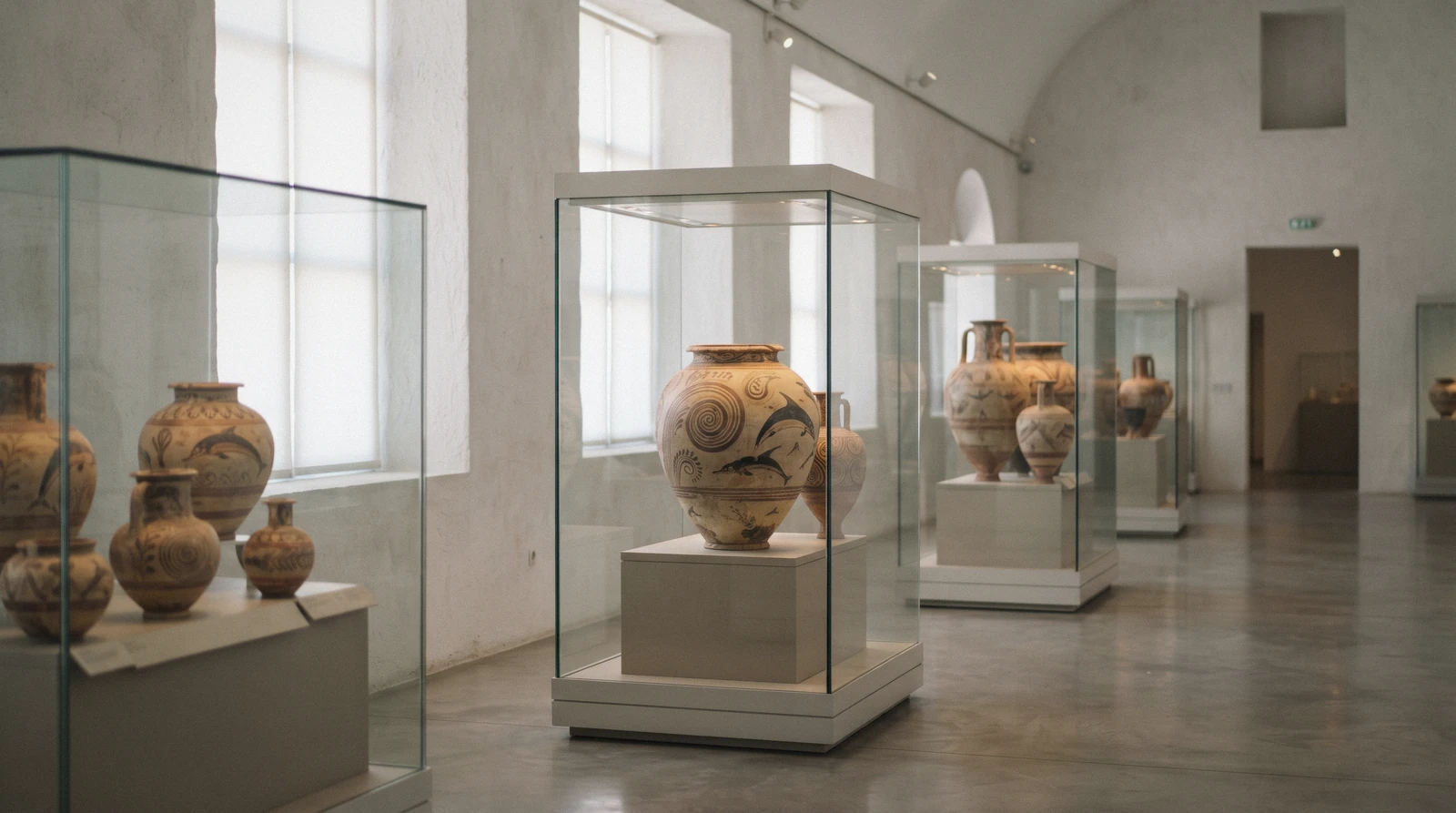
The museum of prehistoric Thera sits in the middle of Fira and holds the finds from the Bronze Age town buried at Akrotiri. Entry is cheap, the visit is short, and the wall paintings here are the reason many people skip a second trip to the excavation site. This page covers the hours, the price, what the rooms hold and how to fit the museum into a day. It is part of our Santorini, Greece travel guide.
Quick answer Ticket, hours and visit length
The museum of prehistoric Thera in Fira costs $11.19 (€10) to enter, reduced $5.59 (€5), and opens 08:30-15:30, closed Tuesday. It houses the frescoes and finds excavated at Akrotiri, the Bronze Age town buried by the eruption of circa 1600 BC. Most visitors need 45-75 minutes, in our estimate.
Key takeaways
- Entry is $11.19 (€10) at the door, and the museum closes at 15:30, so go early. See how it compares on Santorini tickets.
- Closed Tuesdays. Time it with the excavation itself using our Akrotiri guide.
- Short on time? Several coach days include Fira, such as the top sights day trip with wine tasting and Oia sunset.
Key facts
Opening hours
| All year | 08:30–15:30 |
|---|
Closed Tuesday
Admission
- Adult
- $11.19 (€10)
- Reduced
- $5.59 (€5)
- Free
- Free-admission days are listed for the Ministry of Culture sites, not stated separately for this museum
Planning it
- Time needed
- Not stated officially. Our routing: 45-75 minutes
- Book ahead
- Optional — walk-up usually fine
- Address
- Fira, Santorini, Greece
Tickets for the museum of prehistoric Thera
We compare the ways to see the prehistoric collection. No tour on our site sells the museum entry on its own, so the table starts from the official ticket and then lists the full-day tours that pass through Fira or Akrotiri and pair well with a visit.
Do you want the museum alone, or the whole Bronze Age story in one booked day?
| Option | Price | Length | Includes | Book |
|---|---|---|---|---|
| Official museum ticket, bought at the doorAnyone visiting the museum on its own | $11.19 (€10), reduced $5.59 (€5) | Not stated | Entry to the permanent collection, no booking needed in the pack | Official site |
The museum ticket is bought on site and cannot be reserved through us. Figures current in Q4 2026.
Tours that work with a museum visit
These coach days cover Fira, Akrotiri or the villages and leave you a slot to add the museum yourself, usually before or after the pickup point in town.
 from $58.02
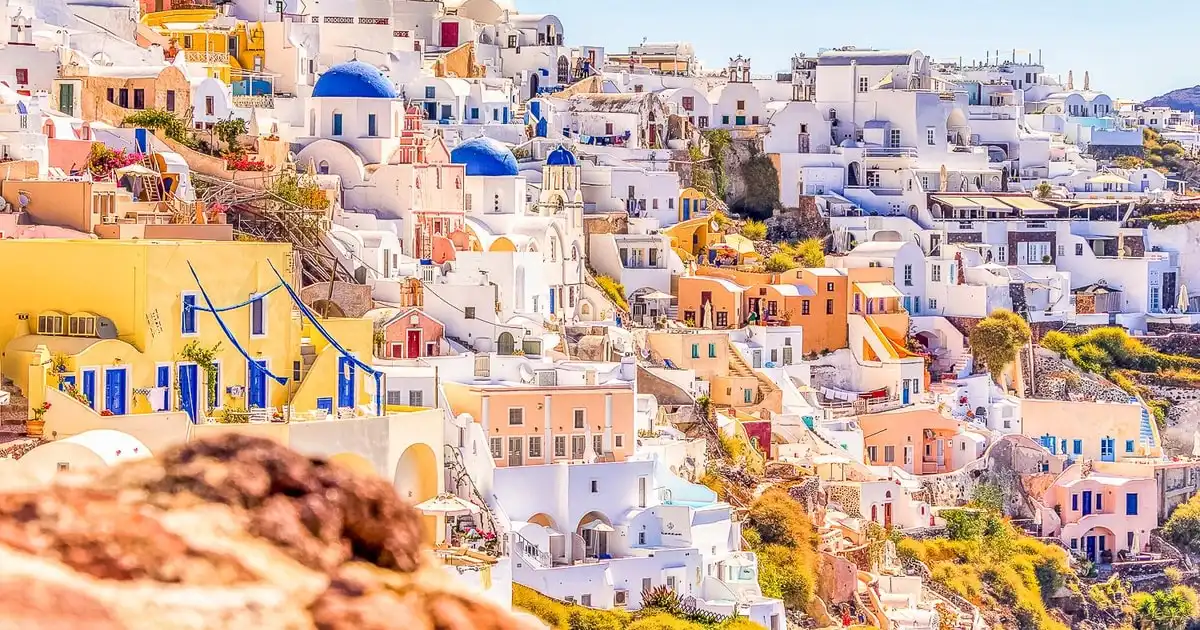
Top Sights Day Trip, Wine Tasting, & Oia Sunset
A nine-hour coach day: the top sights, a winery stop and the Oia sunset, with pick-up and a private option.
Check Availability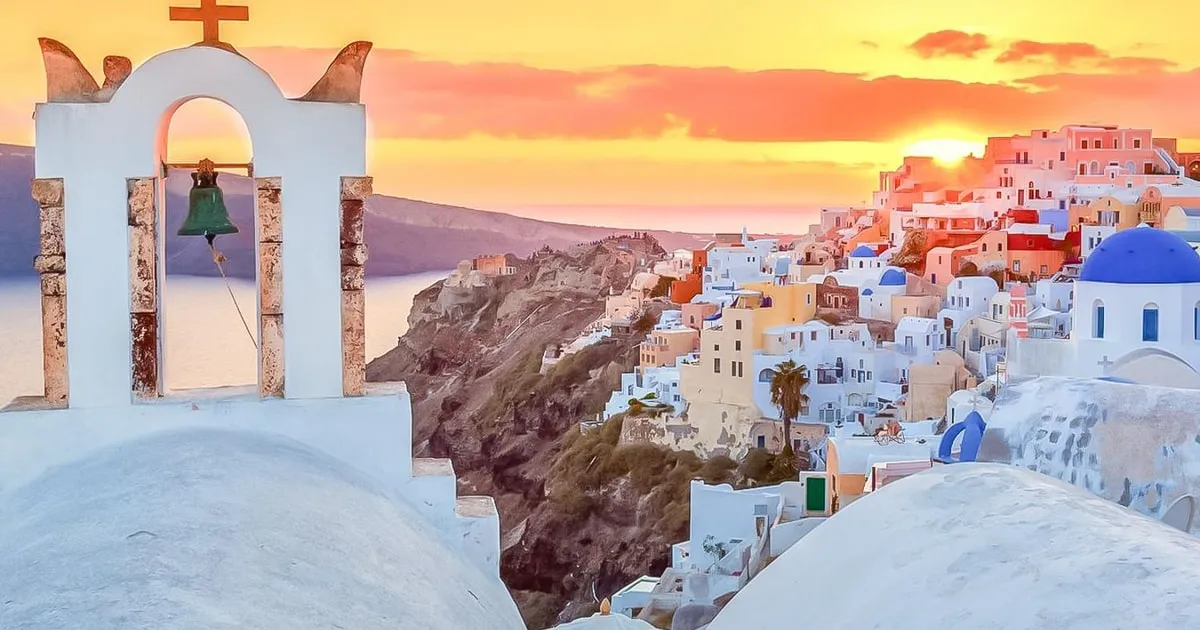 from $59.53
Traditional Sightseeing Bus Tour with Oia Sunset
The classic sightseeing bus day with the Oia sunset, ten hours with pick-up.
Check Availability from $67.50
Santorini Day Tour: Akrotiri, Villages, Wine and Sunset in Oia
The full-day bus tour: Akrotiri with a licensed archaeologist, the black beach, Emporio, Pyrgos and the Oia sunset. The $22.57 added at checkout is the Akrotiri entrance fee (€20).
Check Availability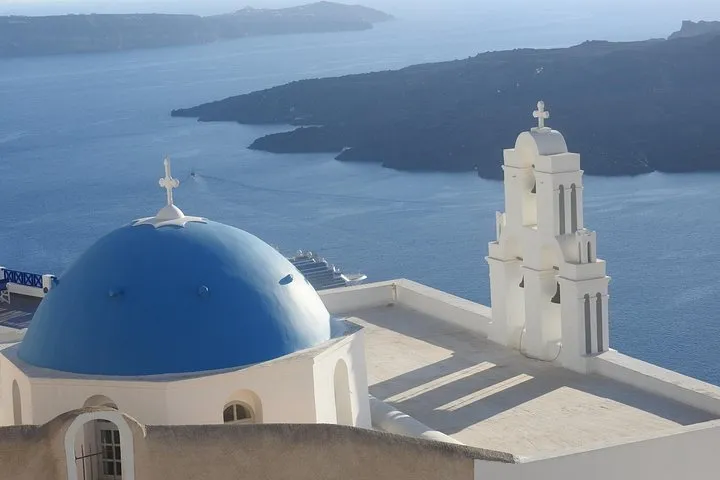 from $66.93
Santorini Half-Day Small Group Tour: Villages, Oia, Caldera Views
A half-day small group of up to 18: Profitis Ilias for the island view, Megalochori, the Firostefani blue dome and Imerovigli, with hotel pick-up.
Check Availability from $62.92
Santorini Highlights Small-Group Tour with Wine Tasting option
A highlights tour in a small group: Oia, the Profitis Ilias viewpoint and the villages. The listing adds $22.57 at checkout and excludes the €20 wine tasting and the Akrotiri entrance.
Check AvailabilityPrices, ratings and details are the platform's own. dollar figures are the listed prices — the platform bills in your account's currency.
Why the museum exists
One eruption created the collection, and one archaeologist spent his career on it.
The town that was buried
Akrotiri was a Bronze Age town on the south coast of the island. Around 1600 BC the Theran eruption, one of the largest volcanic events in human history, buried it in ash. The town had been evacuated before the catastrophe. Excavations found multi-storey houses, sewers and wall paintings, and only a single gold object, a golden goat found in 1999, with no unburied human remains. The ash preserved the buildings much as it preserved the wall paintings that now hang in this museum.
That link matters when you plan. The excavation site shows you the rooms, the streets and the scale of the town. The museum shows you what came out of them. Seeing both is the complete visit, and our Akrotiri guide explains the site itself.
- Buried by the Theran eruption, circa 1600 BC
- Excavated from 1967 by Spyridon Marinatos, continued by Christos Doumas
- The frescoes are split between this museum and Athens
A branch of the national service
The museum belongs to the Ministry of Culture, run through the Ephorate of Antiquities of Cyclades. It sits in the centre of Fira, a short walk from the cable-car area, and shares opening rules with the other state sites on the island. Entry is $11.19 (€10) and reduced admission is $5.59 (€5). It opens 08:30-15:30 every day except Tuesday, which catches out more visitors than any other detail on this page.
Watch out for one myth. Some blogs still list a combined ticket covering Akrotiri, the ancient city on Mesa Vouno and the museums of Fira. No official page lists such a ticket, so do not budget for one. Each site charges separately, which our Santorini tickets page adds up for you.
What you see inside
The collection is small, dense and focused on one town and one moment in time.
The Thera frescoes
The wall paintings are the draw, and they are why the museum holds its own keyword among things to do in Santorini. These are the Thera frescoes lifted from the walls of Akrotiri houses, painted around 1600 BC, decades or centuries before the famous art of Crete reached its late flowering. Expect scenes of nature, ships and daily life, painted in the reds, blues and ochres of the Aegean palette. The wall paintings are split between this museum and the National Archaeological Museum in Athens, so what you see here is the island's share of the surviving work.
Give the fresco rooms the largest share of your time. Labels are concise, and the rooms are small, so a slow circuit of the paintings takes perhaps twenty minutes on its own.
- Wall paintings lifted from Akrotiri houses
- Scenes of ships, nature and everyday Bronze Age life
- Part of the fresco corpus is in Athens, not here
Pottery, tools and daily objects
Beyond the paintings, the cases hold the ordinary equipment of a wealthy port town: pottery, storage vessels, tools and household objects recovered from the excavation. Read them as evidence of trade. Akrotiri's houses had sewers and multiple storeys, which tells you the town was rich, and the pottery styles show contact across the Aegean. The famous golden goat, found as late as 1999, is the single gold object from the town, a reminder of how much remains underground.
Because the museum is one focused collection rather than a general survey of Greek antiquity, it answers the question of what an archaeological museum is for in a very direct way. Everything here came from one dig, one hillside and one destruction horizon. That single-story focus is what makes a short visit worthwhile, and it pairs naturally with the site itself, covered in our Akrotiri guide.
Hours, and when it is quiet
The museum keeps short hours all year, and one closing day changes your whole itinerary.
Opening hours and the Tuesday problem
The museum opens 08:30-15:30, every day of the week except Tuesday. There is no evening opening listed at any time of year, unlike the Archaeological Museum of Thera in the same town, which stays open until 21:00 on Saturdays. That means the museum is strictly a morning and early-afternoon visit, and a 15:30 close is earlier than most attractions on the island, where dinner is barely starting by then.
Tuesday is the trap. If you arrive on a Tuesday, the museum is shut, along with nothing else on most itineraries, so build your plan around it. Our Santorini travel tips page has the wider timing rules. Last entry is 20 minutes before closing at the Ministry sites, so walk in by 15:10 at the latest.
- Open 08:30-15:30 all year
- Closed Tuesdays
- Last entry 20 minutes before closing
The quiet slots
Two windows are calm, in our estimate. The first is 08:30 to about 09:30, before tour groups working down from the caldera arrive in central Fira. The second is after 14:00, when coaches have left for afternoon beach stops and the day visitors have drifted toward lunch. Midday, from about 11:00 to 13:00, is when organised groups pass through, because it slots between a morning site visit and an afternoon free period.
Season changes the pressure more than the clock. The museum is indoors and air-cooled by stone, so it is a natural midday stop in July and August heat, which is exactly when everyone else has the same idea. In the cooler months the rooms can be nearly empty. See the month-by-month pattern on our best time to visit Santorini page.
Getting there
The museum sits in central Fira, which makes it one of the easiest major sights on the island to reach.
On foot from anywhere in Fira
The museum stands in the middle of Fira, the island's capital, a few minutes' walk from the central bus station and from the caldera rim. If you are staying in Fira itself, you walk. From Firostefani or Imerovigli it is a stroll south along the rim path, part of the same route as the famous Fira to Oia hike, just walked in reverse and downhill toward the busier end. Walking times are our estimate, not official figures.
Cruise passengers land at the Old Port below the cliff. Ride the Santorini cable car up, one way $11.19 (€10), and the museum is a short walk into town. The staircase on foot involves several hundred steps, which the cable car exists to spare you.
By bus from the rest of the island
The KTEL bus network funnels almost every route through Fira, so from most of the island you ride to the capital and walk in. Fira to Oia costs $2.46 (€2.20), as do Fira to Kamari, Pyrgos, Megalochori and the airport line. From Perissa or Athinios port the fare is $3.02 (€2.70), and from Vlychada $3.13 (€2.80). Departure times are seasonal and published only as a PDF, so check the KTEL timetable on the day rather than trusting a blog.
If you rent a car or quad, parking in central Fira is the hard part, not the drive. Our getting around Santorini page compares buses, cars and transfers in detail. For arrival days, the airport bus stops on the Fira side of the runway area, and the airport is about 6 km from town.
How much time to give it
The museum is compact, but the right length of visit depends on what you pair it with.
Three ways to route the visit
The official visit length for the museum is not stated, so our routing below is our estimate, built from the size of the collection and the opening window. The short version squeezes the frescoes into a morning that also covers the caldera rim. The standard version is what we would choose, because it pairs the museum with the excavation at Akrotiri in the same day, which is the pair the collection was made for. The deep version adds the second Fira museum and suits real archaeology fans with a full day in town.
Book nothing ahead. Tickets are sold at the door, and queues are short outside the midday group hours.
| Routing | Time (our estimate) | Cost of entries | What it covers |
|---|---|---|---|
| Quick fresco stop | 45 minutes | $11.19 (€10) | Fresco rooms and highlights only |
| Museum plus Akrotiri | About 5 hours with travel | $33.60 (€30) total | The museum in the morning, the excavation site after the bus south |
| Two museums in Fira | 2.5-3 hours | $22.40 (€20) total | This museum plus the Archaeological Museum of Thera next door |
From eruption to exhibition
The dates behind the collection, in order.
-
c. 1600 BC
The Theran eruption
A VEI 7 eruption buried the Bronze Age town at Akrotiri in ash and destroyed it, one of the largest volcanic events in human history.
-
c. 1600 BC
The evacuation
The townspeople appear to have left before the eruption, since no unburied human remains and only a single gold object have been found.
-
1895-1904
The hilltop digs
Baron Hiller von Gaertringen excavated the Dorian city on Mesa Vouno, a separate and later site from the Bronze Age town.
-
1967
Akrotiri excavated
Spyridon Marinatos began the dig at Akrotiri, uncovering multi-storey houses, sewers and wall paintings, work later continued by Christos Doumas.
-
1999
The golden goat
Excavators found the single gold object from the town, a golden goat, more than three decades into the dig.
-
2005-2012
The site closes
A new protective roof at Akrotiri collapsed before completion, killing a visitor, and the excavation site stayed closed until April 2012.
-
Today
The finds on display
The museum of prehistoric Thera in Fira now holds the island's share of the Akrotiri finds, including the wall paintings, open 08:30-15:30 and closed Tuesday.
Sources: Ephorate of Antiquities of Cyclades pages, hh.gr and Wikipedia summaries in the facts pack.
Dos and don'ts at the museum
Do
- Go at 08:30 opening or after 14:00 for the quietest rooms, in our estimate
- Buy your $11.19 (€10) ticket at the door, no booking is needed
- Plan around the Tuesday closure before you lock the rest of your day
- Walk to Akrotiri's story first in the fresco rooms, then the pottery cases
- Combine it with the Archaeological Museum of Thera in the same town for the full Fira pairing
- Allow the last entry rule of 20 minutes before closing
Don't
- Do not turn up on a Tuesday, the museum is shut all day
- Do not expect an evening visit, the doors close at 15:30 all year
- Do not budget for a combined archaeological ticket, no official one is listed
- Do not drive into central Fira at midday, parking is the bottleneck
- Do not rush the fresco rooms, they are the core of the collection
- Do not confuse the closure days of the two Fira museums, they differ
Five things most visitors do not know
Small facts that change how you use the visit.
The list
Each of these comes straight from the official sources, and each one catches someone out every week in season.
- The frescoes are shared with Athens. The wall paintings are split between this museum and the National Archaeological Museum in Athens, so no single visit shows the whole corpus Ephorate and Wikipedia summaries in the facts pack.
- The town was empty when it died. No unburied human remains have been found at Akrotiri and only a single gold object, a golden goat found in 1999, which means the residents evacuated before the eruption facts pack.
- The site of the finds stayed closed for years. A protective roof collapsed in 2005 before completion, killing a visitor, and the Akrotiri excavation was closed until April 2012 Wikipedia, facts pack.
- Saturday night is the other museum's night. The Archaeological Museum of Thera, minutes away, stays open until 21:00 on Saturdays while this museum always shuts at 15:30 cyclades.culture.gov.gr, facts pack.
- There is no combined ticket. The old combined ticket for the sites and museums appears on blogs but no official page lists it, so pay for each entry separately facts pack.
Map: the museum and what is around it
The museum sits in central Fira, with the caldera rim and the bus station within a few minutes' walk.
- 1 Museum of Prehistoric TheraThe Bronze Age collection from Akrotiri, open 08:30-15:30 and closed Tuesday.
- 2 FiraThe island capital, with the central bus station and the caldera rim a few minutes away on foot.
- 3 Three Bells of FiraThe famous white church and blue dome that anchors the classic Fira caldera photos.
- 4 Fira Old PortCruise tenders land here, and the cable car climbs the cliff to town.
- 5 FirostefaniThe quiet rim village just north, an easy walk from the museum before opening time.
- 6 Santo WinesThe cooperative winery south of Fira, an easy pairing with a morning in the museum.
Numbers match the pins on the map.
Nearby the museum
Three stops that slot naturally before or after your visit.
Archaeological Museum of Thera
The second state museum in Fira holds finds from the later historical periods of the island, with a Saturday late opening to 21:00. Read how the two museums divide the story in our Archaeological Museum of Thera guide.
A few minutes on foot in Fira (our estimate) Read the guideAkrotiri excavation site
The buried town itself, where the museum's frescoes and pottery were found. Our Akrotiri guide covers the site, and Akrotiri tickets cover the entry rules.
By bus from Fira, seasonal timetable (KTEL) Read the guideSanto Wines
The Santorini cooperative's winery with a caldera-edge terrace, open all year with tastings booked online. Pair it with a museum morning using our Santo Wines guide.
South of Fira by bus or short drive (our estimate) Read the guideQuestions visitors ask
What does it cost to enter the museum of prehistoric Thera?
Adult entry is $11.19 (€10) and reduced admission is $5.59 (€5). You buy the ticket at the door in Fira, and no advance booking is required. For context against the island's other paid sights, see our Santorini tickets page. Free-admission days exist for the Ministry of Culture sites but are not listed separately for this museum.
What are the opening hours?
The museum opens 08:30-15:30 every day except Tuesday, all year. Last entry follows the Ministry rule of 20 minutes before closing, so arrive by 15:10 at the latest. There is no evening opening, which makes this a morning or early-afternoon stop only.
What is an archaeological museum?
It is a museum built around objects recovered from excavations rather than art collected later. Everything here came from digs: the wall paintings, pottery and tools lifted out of the Bronze Age town at Akrotiri. The collection tells one story from one site, which is why the visit is short but unusually focused.
Which museum has the most Greek artifacts?
That is a national question, and the big national collections in Athens hold far more than any island museum. What this museum has is depth on one moment: the richest group of Bronze Age finds from Santorini itself, including the wall paintings from Akrotiri. For island antiquity, it is the strongest single collection on Santorini.
Is the museum the same visit as Akrotiri?
No, and the difference is the point. The excavation at Akrotiri shows the rooms and streets where the finds were made, while the museum in Fira shows the objects themselves, including the frescoes. They sit about 12 km apart in a straight line, linked by the Fira bus. Doing both in one day is our preferred routing.
Are the frescoes here or at the site?
Here, mostly. The wall paintings recovered from Akrotiri are divided between this museum and the National Archaeological Museum in Athens, and the island's share is what you see in Fira. The excavation site shows the architecture and some contextual displays, but the painted plaster itself hangs in the museums, not at the dig.
Can I visit both the museum and Akrotiri in one day?
Yes, in our view it is the best pairing on the island. Both keep short hours, so start at the museum at 08:30, then catch the bus south to the excavation site. Check the seasonal KTEL PDF for return times. Full-day coach options such as the Akrotiri, villages, wine and sunset tour cover the site with a guide if you would rather not manage the buses.
What historical sites should I see in Santorini?
Start with Akrotiri for the Bronze Age, then this museum in Fira to see the finds. Add the Dorian city on Mesa Vouno above Kamari for the classical era, and the second Fira museum for later periods. Our things to do in Santorini hub ranks the full list, and Santorini in 3 days sequences them sensibly.
Where it fits in a day
The 15:30 close shapes everything, so build the day backwards from it.
A morning built around the museum
Our pick for a first visit: arrive in Fira by 08:30 and do the museum while it is empty. That takes 45-75 minutes, leaving the late morning for the caldera rim. Walk north through Firostefani as far as your legs or lunch schedule allow, then return to Fira for food on the rim, using our Santorini restaurants page. If you want the full story instead, take the bus south after the museum and spend the early afternoon at Akrotiri, returning for the sunset from the rim.
On a Tuesday, invert the plan. Do Akrotiri and the rim in the morning, save the museums for another day, and check the Santorini itinerary options if your stay is short. Coach days that include Fira, such as the traditional sightseeing bus with Oia sunset, leave you free time in town that is long enough for the quick fresco routing in our table above.
Prehistoric Museum On Video
Three videos that show the place before you go.
Santorini | Museum Οf Prehistoric Thera
Santorini | Museum Οf Prehistoric Thera, from mySantorini.tv.
Video: mySantorini.tvWhat is in Akrotiri, Santorini? | History, Archaeological Site, Prehistoric Museum Documentary | 4K
What is in Akrotiri, Santorini? | History, Archaeological Site, Prehistoric Museum Documentary | 4K, from History Victorum.
Video: History VictorumThe Museum of Prehistoric Thera (Santorini) 🇬🇷
The Museum of Prehistoric Thera (Santorini) 🇬🇷, from Fabled City.
Video: Fabled CityVideos load from YouTube only when you press play.
Prices, hours and terms are set by the venue or operator and confirmed at checkout.
We may earn a commission if you book through one of our links, at no extra cost to you. Full affiliate disclosure