 Santorini Island Guide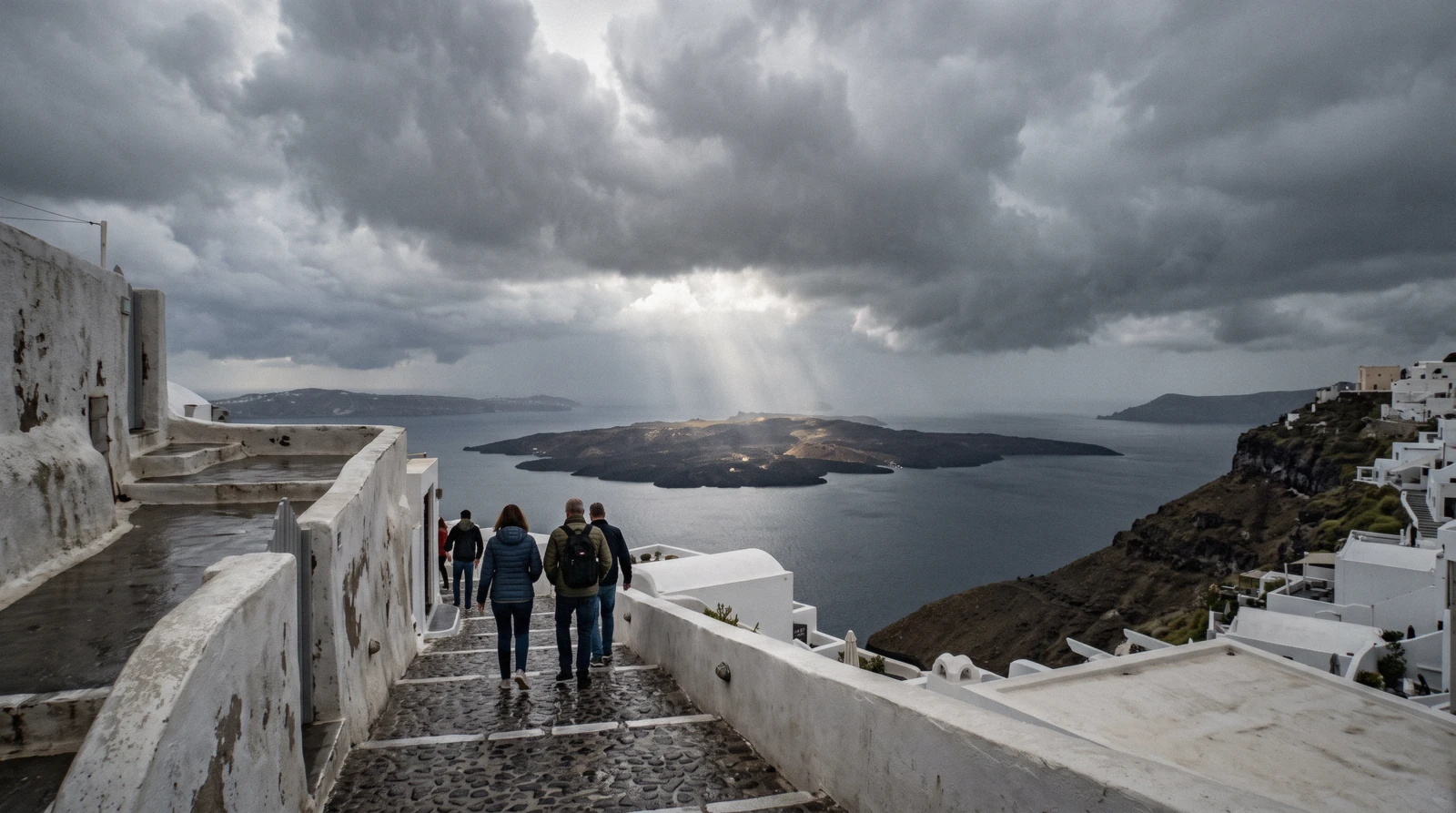
Santorini weather is the first thing to sort before you book, because the island has two very different seasons. This page gives Santorini temperature and sea temperature by month, from thirty years of climate data, then matches each season to the right days out. For the fuller planning picture, start with our travel tips hub. It is part of our Santorini, Greece travel guide.
Quick answer Best months and sea warmth
May, June, September and early October give the best Santorini weather, with daytime highs of 20-24°C (68-75°F), little rain and a sea already at 19-25°C. July and August are hotter, drier and windier, and the most crowded. Winter is mild at 13-14°C but wet and quiet, and the caldera is at its stillest and cheapest.
Key takeaways
- Check the month-by-month climate table before you fix your dates.
- Book a volcano and hot springs boat in any season, the warm springs work all year.
- Swimming is comfortable from June to October, see the sea temperature rows.
Santorini Weather by Month: Air, Rain and Sea
Thirty years of reanalysis data for a sea cell just off the island, so treat the highs as sea-moderated averages that sit two to three degrees under a thermometer in a landlocked street in Fira. Sea temperature comes from a shorter marine record.
| Month | High | Low | Rain mm | Rain days | Sea |
|---|---|---|---|---|---|
| January | 12.8°C (55°F) | 9.9°C (50°F) | 60 | 10.9 | 17.8°C |
| February | 13.1°C (56°F) | 10.0°C (50°F) | 57 | 8.8 | 17.1°C |
| March | 14.3°C (58°F) | 11.0°C (52°F) | 41 | 6.5 | 17.1°C |
| April | 16.7°C (62°F) | 13.0°C (55°F) | 15 | 3.5 | 17.7°C |
| May | 20.1°C (68°F) | 16.3°C (61°F) | 10 | 2.0 | 19.3°C |
| June | 24.0°C (75°F) | 20.2°C (68°F) | 2 | 0.6 | 22.7°C |
| July | 26.1°C (79°F) | 22.4°C (72°F) | 0 | 0.1 | 24.6°C |
| August | 26.2°C (79°F) | 22.9°C (73°F) | 1 | 0.3 | 25.9°C |
| September | 24.1°C (75°F) | 20.9°C (70°F) | 6 | 1.1 | 25.1°C |
| October | 20.7°C (69°F) | 17.6°C (64°F) | 20 | 3.5 | 23.1°C |
| November | 17.5°C (64°F) | 14.4°C (58°F) | 32 | 5.7 | 21.1°C |
| December | 14.5°C (58°F) | 11.6°C (53°F) | 55 | 9.4 | 19.0°C |
The same data underpins our deeper looks at Santorini in October and the best time to visit Santorini. Figures current in Q4 2026.
How Santorini Weather Actually Behaves
Four patterns explain almost everything you will feel on the island, from the wind that cancels boats to the reason a beach day and a caldera walk can feel like different countries.
Wind, not heat, is the story
The mean daily maximum wind speed runs 28-37 km/h in every month of the year. From July to August the seasonal meltemi pushes the strongest days, and it is the reason caldera boats get cancelled. Every operator listing carries a weather clause for exactly this. The practical move is to book any boat early in your stay, on a departure with free cancellation up to 24 hours ahead, so a windy day costs you nothing. Our catamaran cruise guide compares the options.
Wind also shapes the beaches. The east coast at Perissa and Kamari catches the meltemi and gets surf and flying sand, while the south coast at Vlychada stays calmer behind its cliffs.
- Book boats for early in the trip, with free cancellation
- Expect choppy water on east-coast beaches in July and August
- Wind chill on the caldera rim makes a jacket useful even in May
The numbers understate the warmth
The climate record above comes from a data cell that is mostly sea, so its daytime highs read two to three degrees cooler than a thermometer on land in Fira would. Read 24°C (75°F) in June as a low-twenties day in town, warmer in sheltered caldera corners. Nights stay mild from June to September, with lows of 20-23°C, so you eat outdoors without a second thought.
The reverse holds in winter. A 13°C (56°F) January afternoon feels raw when the wind comes up the caldera walls, and most island businesses shut for the season. Hotels are cheap, though, and our cheap hotels page shows how far a winter budget goes.
Rain arrives only in winter
July records effectively no rain and August about 1 mm, which is why the island turns brown by late summer. Real rain arrives with November, December and January, at 32-60 mm a month across six to eleven rainy days. April and October sit in between, at 15-20 mm and three or four rainy days.
For sightseeing this is good news. An afternoon shower in April or October rarely spoils more than a few hours, and the roofed Akrotiri excavation is the perfect rainy-day site, buried in ash by the eruption of circa 1600 BC and now under a protective roof. Its winter hours run 08:30-15:30, closed Tuesdays.
Summer: June to August
The hottest, driest and busiest stretch, and the season when the meltemi and the crowds both peak. Here is what the weather means for your days.
Heat, crowds and the meltemi
July and August post highs of 26°C (79°F) in the sea-moderated record, with rain essentially absent. The heat is real in the caldera villages, where white walls bounce light and shade is scarce on the rim path. Do the Fira to Oia hike before 09:00 or after 17:00, and carry more water than feels reasonable, because the rim has almost no shade along its roughly 10 km.
This is also peak season. Sunset crowds pack Oia castle every evening, and hotel rates sit at their annual high. Our where to stay page breaks down which villages hold up best in the crush.
The meltemi is the wildcard. Boats run most days, but the wind days are the ones operators cancel. A premium small-group catamaran cruise with hotel pick-up is easier to reschedule than a fixed slot.
Swimming at its best
Santorini sea temperature peaks in August at 25.9°C, with July at 24.6°C and September close behind at 25.1°C. That is bath-warm by Aegean standards, and it is the reason August visitors forgive the crowds. The black sand at Perissa and Kamari heats hard by midday, so arrive early for a front-row spot or bring footwear.
Boat days shine in this window despite the wind risk. The caldera water sits calmer than the open east coast, and a half-day exclusive catamaran cruise stops at the warm springs off Palea Kameni, where iron-rich water stains light-coloured swimwear a rusty orange. Wear something you do not mind losing to the volcano.
Shoulder Season: April, May, September and October
Our pick for most travellers. The Santorini temperature sits in the low twenties, the sea has warmed or not yet cooled, and the island breathes.
Why we would book these weeks
May pairs a 20°C (68°F) daytime high with a 19.3°C sea and two rainy days a month. September does better still, at 24°C (75°F) by day, a 25.1°C sea and one rainy day. These are walking months, swimming months and wine months all at once. The vines that make Santorini wine famous are trained in low baskets against the wind, and a terrace tasting at Santo Wines in late September is hard to beat.
October cools to 20.7°C (69°F) by day with a still-warm 23.1°C sea and about four rainy days. It is the last comfortable month for the rim walk, and the crowds thin visibly after the first week. Our Santorini in October page has the detail, including the stepped-down opening hours at Akrotiri.
April is the slow warm-up, at 16.7°C (62°F) by day and a 17.7°C sea, too cool for most swimmers. It suits hikers and sightseers, and the landscape is at its greenest before the summer drought.
What the shoulder season changes practically
Ferry and flight schedules trim back from their summer peak, so check connections before you commit, especially for getting from Athens to Santorini. KTEL buses run a seasonal timetable that shrinks after October, and departure times are not published in fixed form, so check the KTEL PDF on arrival. The full Fira-Oia line costs $2.46 (€2.20) whenever it runs.
Everything major stays open. The cable car between Fira and the Old Port runs from 07:00 with extended evening hours through October, at $11.19 (€10) one way. Museums in Fira, including the Museum of Prehistoric Thera, hold their 08:30-15:30 hours all year.
Winter: November to March
Mild by northern European standards, wet by island standards, and quiet enough that you share the caldera with locals. Know what shuts before you go.
What the mild numbers hide
Daytime highs of 12.8-17.5°C (55-64°F) sound pleasant until you add the wind funnelling up the caldera. Pack a proper jacket. Rain reaches 55-60 mm in December and January across nine to eleven days, and ferry crossings get rougher, so build slack into any ferry from Mykonos.
The upside is a different island. Imerovigli and Firostefani are walkable in solitude, the blue domes of Oia photograph without queueing, and hotel prices fall hard. Many tavernas and caldera restaurants close for the season, but Fira keeps a year-round core. For the wider trade-offs, see our best time to visit analysis.
What stays open in winter
The big archaeological and museum sites keep reduced hours but stay open. Akrotiri runs 08:30-15:30, closed Tuesdays, at $22.40 (€20) full price. Ancient Thera on Mesa Vouno above Kamari is the exception to plan around, open only Fridays to Sundays in November, by appointment from December to February, and Thursdays to Mondays in March. The Dorian city dates from the 9th century BC.
Boats to the volcano run year-round when the sea allows, though with fewer departures. The three-hour volcano and hot springs cruise format still works in a 14°C noon, and the €5 park fee applies in any month. The cable car cuts to morning and afternoon windows in winter, roughly 07:30-10:30 and 14:30-18:00 in November and March, with a maintenance break in the deep winter months, so check before relying on it.
Santorini Sea Temperature and Swimming
The Santorini sea temperature record is shorter than the air record, but the shape is clear, a long warm plateau from June to October and a cool but never cold winter.
When the sea is warm enough
The sea tops 22°C from June through November, peaking at 25.9°C in August. That is seven months of genuinely comfortable swimming, which surprises people who assume the Aegean is cold. Even January reads 17.8°C, cool enough that only hardy swimmers bother yet far from icy. Our pick for a pure beach-and-swim trip is early September, when the sea is at 25.1°C and the air has eased to 24°C.
Beach choice matters as much as month. The east coast at Perissa and Kamari takes the meltemi swell in summer, while the south coast at Vlychada and the caldera side stay calmer. If snorkelling is the point, a catamaran day with meal and open bar gets you to the clear water off Red and White beaches that the shore cannot reach.
Red Beach and the closed path
Red Beach below Akrotiri is the most photographed swim spot on the island, and the one with a catch. The land path is closed by the municipality for rockfall danger, and a rockfall after the February 2025 earthquake confirmed the risk. Treat it as reachable only by boat or from the viewpoint above.
Several caldera boats pass it, including the budget classic catamaran cruise from Vlychada and the volcano, hot springs and Thirassia cruise from the port. The water in front of the red and white cliffs is exactly what the boats stop for, so a swim here costs you no extra planning. Our Santorini beaches guide ranks the alternatives.
Planning Your Days Around the Forecast
A ten-day forecast will tell you the wind, and the wind decides more on this island than the temperature does. Here is how to sequence a trip.
Build a wind-proof itinerary
Book your boat day for the first calm-looking day of the trip, not the last. If the meltemi cancels it, you still have days to rebook. On windy days swap to land plans that the wind cannot touch, like the roofed galleries at Akrotiri and the Archaeological Museum of Thera, or a wine afternoon in Megalochori and Pyrgos.
Structure ideas by length are in our one day, two day and three day itineraries. The rim walk between Fira and Oia needs a calm, cool window, so it belongs in the morning of a low-wind day in May, June, late September or October. Sunset viewing from the Oia castle area works in any weather, but a still evening transforms it.
Costs shift with the season
High season prices everything up, from hotels to the premium on a sunset cruise. Winter reverses it, and the shoulder months sit in the middle. Two fixed costs are worth knowing regardless of month. Every cruise passenger disembarking at Santorini pays a fee of €20 from June to September, €12 in April, May and October and €4 the rest of the year, charged through the cruise line. And every room booked in April to October carries the climate resilience fee per night, from €2 for simple rooms to €15 for five-star hotels and villas, paid at the property.
Our costs of a Santorini trip page totals a realistic daily budget by season, and the free things to do list covers the days when the weather is perfect and the wallet is not.
What Each Month Is Actually Good For
One-line verdicts from the same data, so you can match your trip to your priorities rather than a generic best month.
The verdict table
Every traveller weighs heat, crowds, price and swimming differently. The table below is our read of the year, month by month, built on the climate figures above and how the island operates. Where we give an opinion it is labelled as ours.
| Month | Verdict |
|---|---|
| January | Quiet, wet and cheap. Museums and Akrotiri on short winter hours. |
| February | Similar to January, plus the raw wind. Bring a real jacket. |
| March | Green hills, thinning rain, walking weather returns by late month. |
| April | Our pick for sightseers. Mild, green, pre-crowd, sea still cool. |
| May | Our overall pick. Warm days, warm-enough sea, island in bloom. |
| June | Best all-rounder for most people. Hot but not brutal, sea at 22.7°C. |
| July | Beach and boat weather, peak crowds, meltemi cancellations possible. |
| August | Warmest sea of the year at 25.9°C. Book everything far ahead. |
| September | Swimmers' pick. Sea still 25.1°C, air eased to 24°C, crowds thinning. |
| October | Last easy walking month, sea still 23.1°C, about four rainy days. |
| November | Shoulder ends. Cool, some rain, island closing down for winter. |
| December | Wet and quiet. Year-round Fira core, low hotel prices. |
If you can only choose two windows
Book late May or the second half of September and you will get Santorini weather close to its best without the peak-season premium or the meltemi at full strength. Both windows have warm enough seas for daily swims, calm enough mornings for the rim walk, and full schedules for boats and buses.
If your dates are fixed to school holidays in July or August, go anyway, but book boats and the cable car expectations early, do the rim walk at dawn, and use the east coast beaches early or late. If winter is your only window, the trip still works, it just becomes a museums, villages and wine trip rather than a beach one.
Boats That Run in Every Season
Caldera cruises are the classic day out in any month with a calm sea. These are the ones we would book first, with free cancellation where offered.
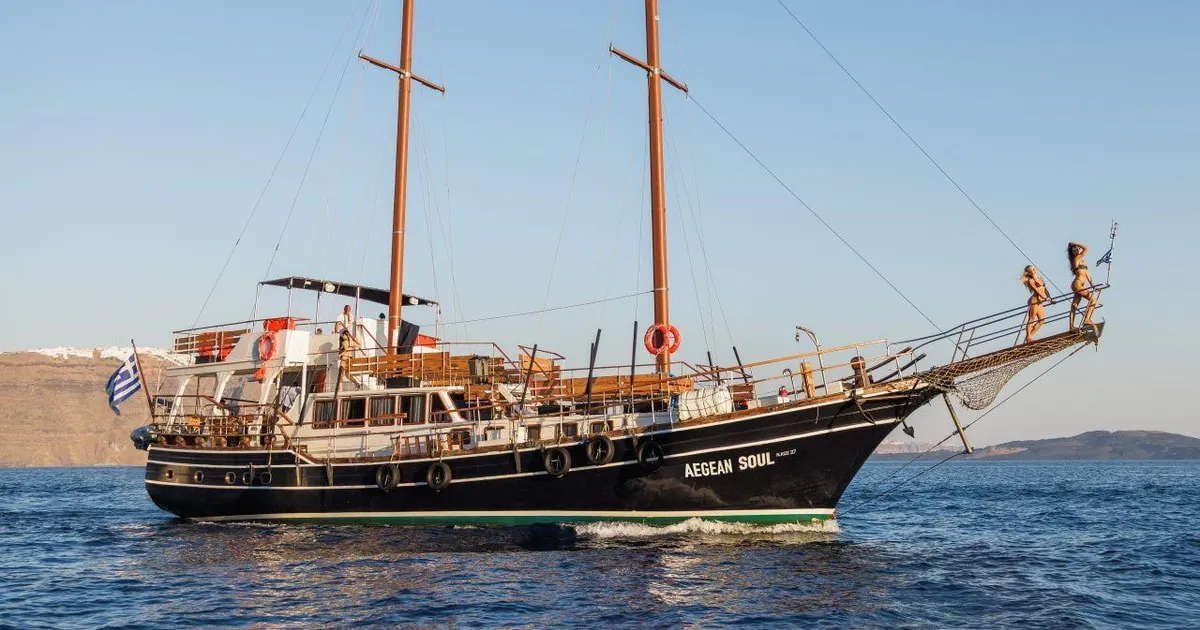 from $35.32
Volcanic Islands Cruise with Hot Springs Visit
The most-booked volcano day: a big boat to the Nea Kameni crater and the hot springs, with longer options adding Thirassia. The €5 volcano fee is paid on top.
Check Availability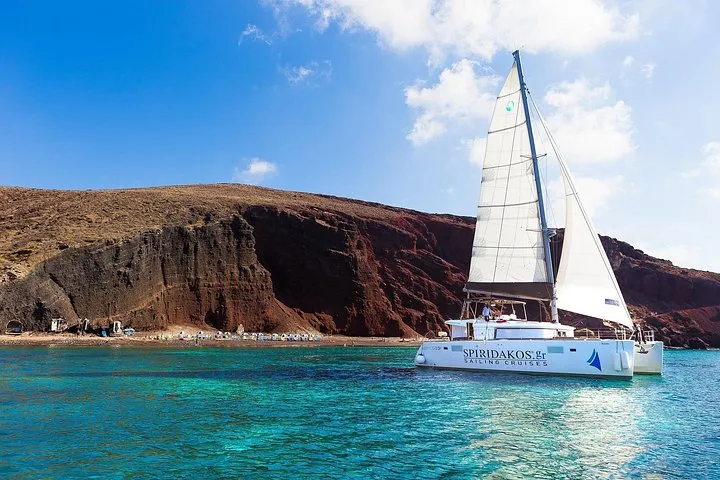 from $148.73
Premium Small-Group Catamaran Cruise with BBQ, Open Bar, Transfer
Five hours from Vlychada marina past Red and White beaches and the Akrotiri lighthouse, snorkel stop, BBQ and open bar on board, hotel pick-up included. Small groups of up to 20.
Check Availability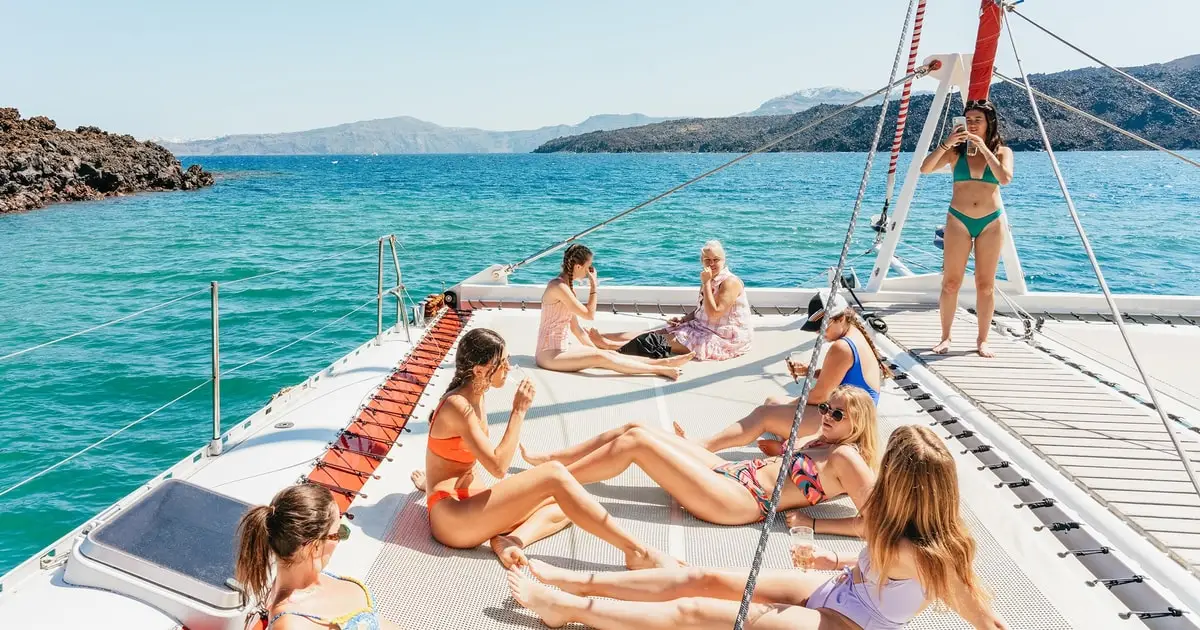 from $84.08
Catamaran Tour with BBQ Dinner, Drinks, and Music
The most-reviewed catamaran on GetYourGuide: five hours with a BBQ dinner, drinks and music, pick-up available.
Check Availability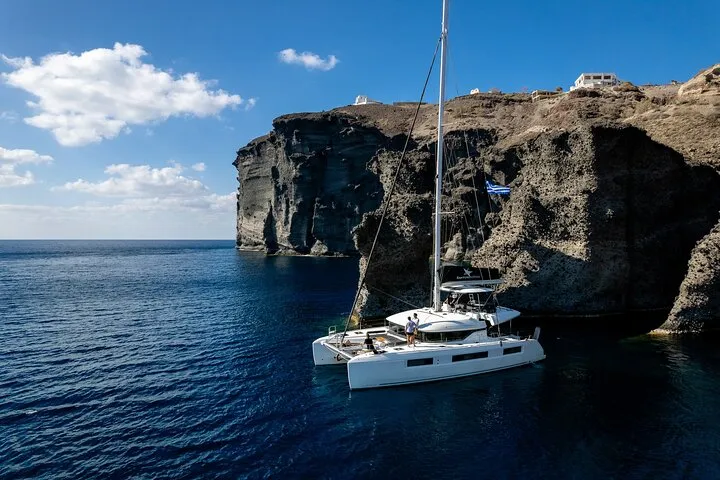 from $123.56
Half-Day Exclusive Catamaran Cruise in Santorini with Meal and Open Bar
A half-day catamaran around the caldera with the hot springs, Red Beach and a Thirassia swim, meal and open bar, capped at 18 guests with hotel pick-up.
Check Availability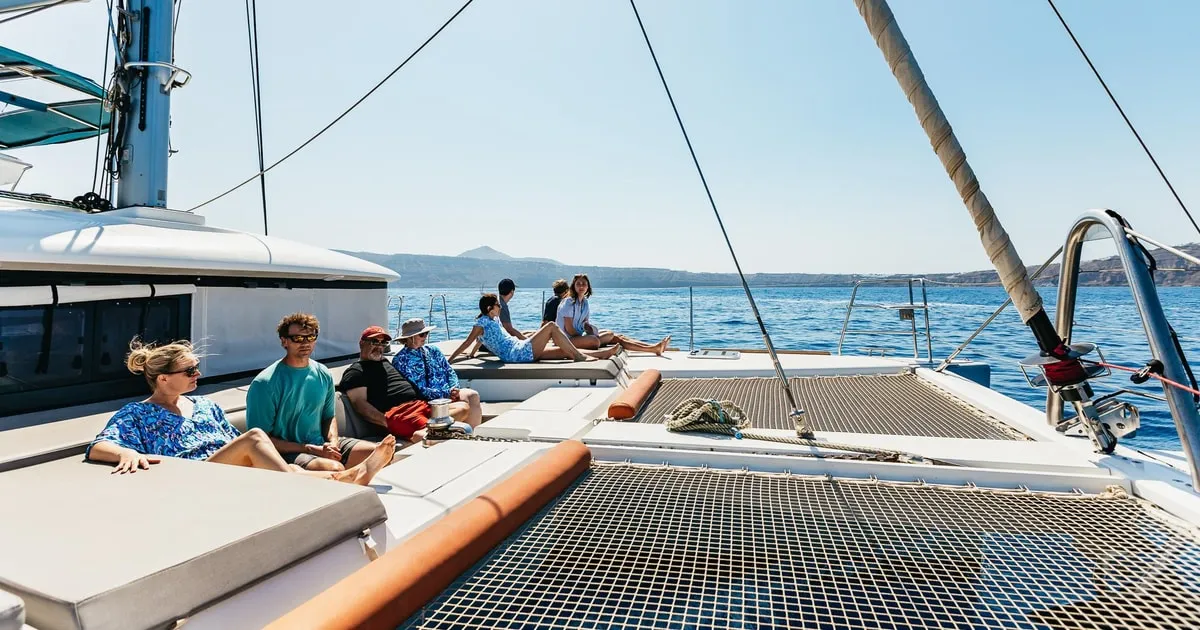 from $123.32
Luxury Catamaran Day Trip with Meal and Open Bar
A five-to-six-hour luxury catamaran day with a meal and open bar, certified by the platform.
Check Availability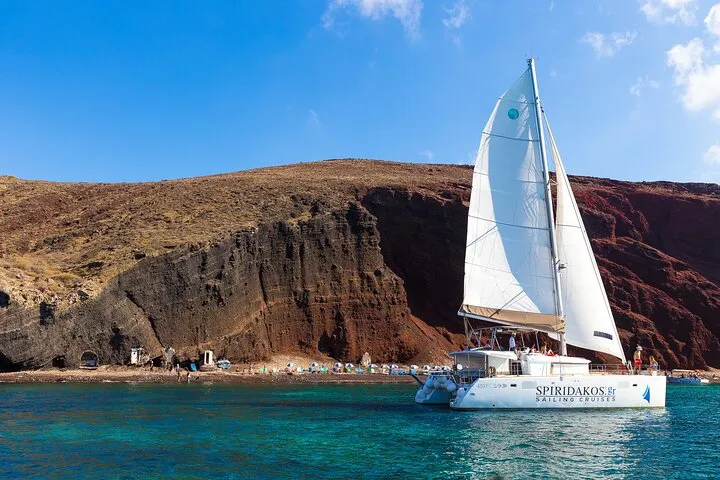 from $91.52
Santorini Classic Catamaran Cruise with BBQ, Drinks and Transfers
The budget version of the Vlychada catamaran: the same five-hour south-coast route with BBQ and soft drinks; a no-transfer option is sold cheaper.
Check Availability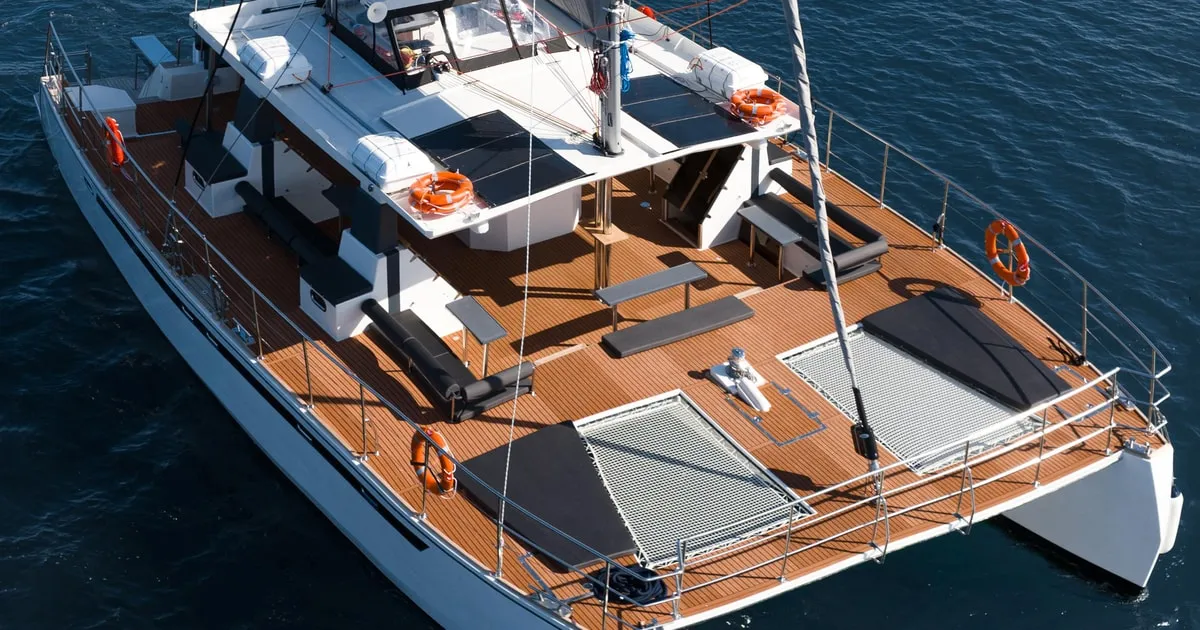 from $67.27
Catamaran Caldera Cruise with Meal and Drinks
The lower-priced caldera catamaran with a meal and drinks, five hours, pick-up available.
Check Availability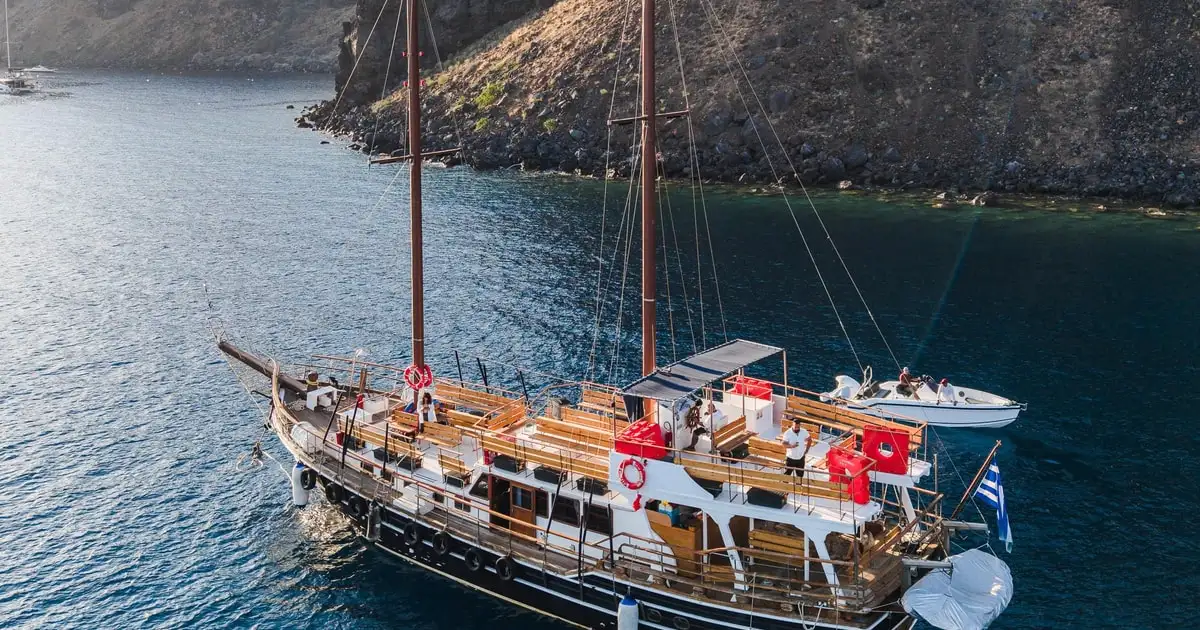 from $31.28
Santorini Port: Cruise to Volcano, Hot Springs & Thirassia
Volcano, hot springs and a Thirassia stop from the port, with pick-up offered; the €5 volcano fee is paid on the island.
Check Availability from $171.61
Santorini Catamaran Cruise with Swim-Stops, Greek Meal and Sunset
A catamaran along the caldera cliffs to the Red and White beaches and the warm springs, with a Greek meal on board and the sunset from the water.
Check Availability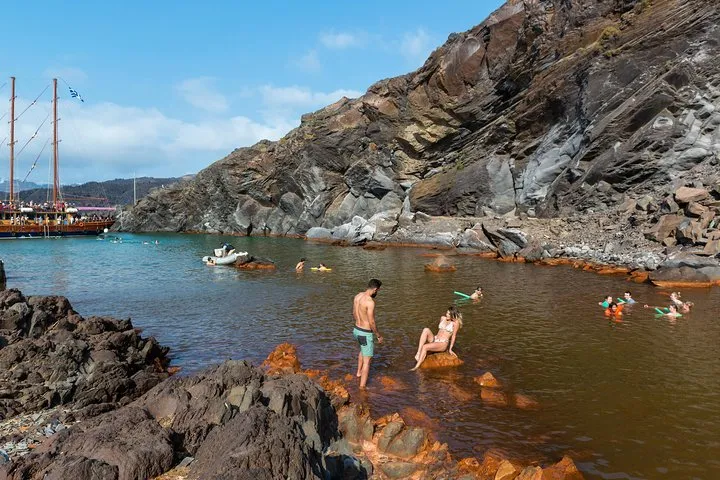 from $34.32
Santorini Volcano and Hot Springs Cruise Tour from Fira Old Port
The classic three-hour boat from Fira Old Port to Nea Kameni: 1.5 hours walking the crater trail, then a swim at the warm springs. The €5 volcano fee is paid on top.
Check AvailabilityPrices, ratings and details are the platform's own. dollar figures are the listed prices — the platform bills in your account's currency.
Weather-Proof Days Out Nearby
When the forecast turns, these pages cover the plans that survive wind and rain.
Akrotiri
The Bronze Age town buried by the eruption of circa 1600 BC sits entirely under a roof, so rain and wind barely matter. Our Akrotiri guide covers the site and its hours.
About 20 min by bus from Fira (our estimate) Read the guideMuseum of Prehistoric Thera
The frescoes and finds from Akrotiri, in the town where you are probably staying. Open 08:30-15:30, closed Tuesdays, $11.19 (€10).
Central Fira, a few minutes on foot (our estimate) Read the guideSantorini wineries
Assyrtiko and Vinsanto taste the same in any weather, and terrace views stretch over the caldera. Our winery guide lists the best stops.
20-30 min by car from Fira (our estimate) Read the guideSanto Wines
The cooperative's caldera-edge tasting centre above the port, open all year with online booking. See our Santo Wines page for the practical detail.
About 10 min by car from Fira (our estimate) Read the guideFira to Oia hike
The roughly 10 km rim walk is the island's best day out when wind and heat are low. Our hike guide maps the route and timing.
along the caldera rim Read the guideSantorini Weather Questions
What is the best month to visit Santorini for weather?
May and September take it, in our view. May runs a 20.1°C (68°F) high with two rainy days and a 19.3°C sea. September is warmer still, at 24.1°C by day, a 25.1°C sea and one rainy day. Both sit outside the peak crowd and price season, and the meltemi is weaker than in July and August.
What is the Santorini temperature in summer?
July and August highs average 26.1°C and 26.2°C (79°F) in the sea-moderated record, and the record reads two to three degrees below a land thermometer, so midday in a sheltered street feels hotter. Nighttime lows hold at 22-23°C, which is why outdoor dining works all evening.
When is the Santorini sea temperature warm enough to swim?
The sea sits above 22°C from June through November, peaking at 25.9°C in August. Even May reaches 19.3°C, which plenty of swimmers find fine. The warm plateau runs long, so a June or October trip still delivers proper beach days.
Does the wind ever cancel boat tours?
Yes. The mean daily maximum wind is 28-37 km/h all year, and the July-August meltemi brings the strongest days, which is exactly why caldera boat operators carry weather cancellation clauses. Book a morning slot early in your stay with free cancellation up to 24 hours ahead, so a windy day costs nothing.
Is Santorini warm in winter?
Mild rather than warm. Highs run 12.8-17.5°C (55-64°F) from December to February, with 55-60 mm of rain in the wettest months and a stiff caldera wind. Museums, Akrotiri and the volcano boats keep running on reduced schedules, and hotel prices drop sharply.
Which month has the least rain?
July effectively has none, at 0 mm and 0.1 rain days, with August close behind at 1 mm. June records 2 mm. If rain-free days matter most to you, these three months are the safest bet, at the cost of peak crowds and the meltemi.
Is the weather good for hiking the Fira to Oia path in summer?
Only early or late. The roughly 10 km rim path has almost no shade, and a 26°C (79°F) afternoon with bouncing white glare is a hard walk. Start before 09:00 or after 17:00, carry plenty of water, and prefer May, June, late September or October for the comfortable version.
Does the weather affect the sunset view?
The Oia sunset happens in any weather, but clarity varies. A still evening after a windy day gives the clearest horizon, while haze from heat or dust can soften it. Crowds, not weather, are the bigger constraint in July and August, so arrive early or watch from a boat.
Weather On Video
Three videos that show the place before you go.
Santorini : The BEST TIME to visit [Analyzing Prices, Crowd & Temperatures]
Santorini : The BEST TIME to visit [Analyzing Prices, Crowd & Temperatures], from Greece Explained.
Video: Greece ExplainedThe Best Time to Visit Santorini Is NOT When You Think
The Best Time to Visit Santorini Is NOT When You Think, from Greece Explained.
Video: Greece ExplainedSantorini in Winter: What It’s Really Like | Weather, Prices & What’s Open
Santorini in Winter: What It’s Really Like | Weather, Prices & What’s Open, from Greece and Beyond.
Video: Greece and BeyondVideos load from YouTube only when you press play.
Prices, hours and terms are set by the venue or operator and confirmed at checkout.
We may earn a commission if you book through one of our links, at no extra cost to you. Full affiliate disclosure