 Santorini Island Guide
The Minoan eruption: the blast that made the Santorini caldera
One of the largest volcanic events in human history tore the middle out of Santorini and left the flooded caldera you see today. This page explains the minoan eruption, what it did to the island and its Bronze Age town, and where to see the evidence in Santorini, Greece travel guide.
Quick answer The Minoan eruption in brief
The Minoan eruption of Thera happened around 1600 BC (the exact date is debated). It was a VEI 7 event that expelled roughly 28 to 41 cubic kilometres of dense rock and collapsed the centre of the island, creating the Santorini caldera. The Bronze Age town at Akrotiri was buried in ash, but excavations found only a single gold object and no unburied human remains, so the residents seem to have left before the climax. The Kameni islands in the middle of the caldera have been built by eruptions since, with the last small eruption in 1950.
Key takeaways
- The eruption is dated to circa 1600 BC, though scholars debate the exact year
- It measured VEI 7 and expelled 28-41 cubic kilometres of dense rock equivalent
- Akrotiri was buried but appears to have been evacuated before the climax
- The Kameni islands grew through later eruptions, the last a small lava dome in 1950
- The 2025 earthquake swarm caused no eruption
What happened during the Minoan eruption
The Thera eruption was one of the biggest volcanic events humans have witnessed. Here is what the evidence says, and where the honest limits of that evidence lie.
How big was it
Volcanologists rate the Minoan eruption at VEI 7 on the explosive scale, the same class as Tambora in 1815. It expelled an estimated 28 to 41 cubic kilometres of dense-rock equivalent, which means the magma that left the chamber would have bulked out to far more as pumice and ash. Ash fell across the eastern Mediterranean and the tsunami it generated reached Crete and beyond.
It ranks among the largest volcanic events in human history, and it did not just cover the island. It emptied a magma chamber and collapsed the centre of what had been a single round island, leaving the sea-filled basin that cruise ships sail into every day.
When did it happen
The short answer is circa 1600 BC. The longer answer is that the exact date is contested. Archaeological dating from finds in the Aegean points one way, radiocarbon measurements from olive branches and other organic material buried in the ash point another, often by a margin of a century or more.
You will see dates spanning the 17th and 16th centuries BC in serious publications. Any guide that gives you a single confident year is smoothing over a real debate. For a visit, the useful fact is the era: late Bronze Age, the time of the Minoan civilisation on Crete, which is where the name Minoan eruption comes from.
A four-phase blast
Volcanologists describe the eruption in phases, starting with a tall ash column, then massive pumice falls that buried buildings up to their roofs, then pyroclastic flows that swept the island and entered the sea. The sequencing is why Akrotiri Santorini survived so well. The early ash and pumice fell and hardened around the walls of the town, preserving multi-storey houses with sewers and wall paintings, much as ash preserved Pompeii.
The destructive later phases destroyed what stood above the ash, but the buried fabric remained intact until excavators reached it.
Verdict
Treat the eruption as a VEI 7 event of around 1600 BC that emptied the island's centre. The size is agreed, the year is not.
Akrotiri: the town the ash preserved
Akrotiri is the clearest window into life on Santorini before the eruption, and it is also the best evidence that the residents saw it coming.
A Bronze Age town with plumbing
The town buried by the eruption was no village. Excavations begun in 1967 by Spyridon Marinatos and continued by Christos Doumas uncovered multi-storey houses with sewers, and walls decorated with frescoes. Many of the famous wall paintings now live in the National Archaeological Museum in Athens, with pieces in the Museum of Prehistoric Thera in Fira.
Walking the streets under the protective roof, you get a street plan and building stock from a sophisticated Aegean port, not a ruin of humble huts.
They evacuated
Here is the detail that surprises most visitors. Excavations at Akrotiri have found no unburied human remains, and only a single gold object, a golden goat found in 1999. Compare that with Pompeii, where the dead were caught in place.
At Akrotiri the people packed up and left before the eruption reached its climax, probably after strong precursor earthquakes warned them. That is why the town reads as an emptied city: furniture gone, valuables gone, walls buried standing. The absence of bodies is the strongest single argument that the eruption gave warning.
Visiting the site
The excavation sits roofed at the south of the island, near red beach Santorini. Admission is $22.40 (€20) with a reduced rate of $11.19 (€10). Hours are Monday and Thursday 08:30-15:30 all year, and on other days Apr-Aug 08:00-20:00, stepping down in Sep-Oct and in winter 08:30-15:30, with Tuesday closed in winter.
The site was closed for years after a roof collapse in 2005 killed one visitor, and reopened in April 2012 under the current structure. If you want a guide inside, an Akrotiri ticket with optional audio covers the basics, and dedicated walks such as the private archaeologist option exist. Practical details are on the Akrotiri tickets page.
Verdict
Akrotiri is the essential stop for the eruption story. Budget two hours and the ticket price, and go with a guide if the archaeology matters to you.
The eruption in myth: Atlantis and the end of the Minoans
A blast this large attracts stories. Two in particular follow Santorini around, and both deserve a careful reading.
Was Santorini Atlantis
Plato wrote of Atlantis as an island power swallowed by the sea. Since the excavation of Akrotiri began, many writers have connected the story with the Minoan eruption: a rich island civilisation, destroyed by a catastrophe from below. The comparison is suggestive.
A Bronze Age port with multi-storey houses and frescoes vanished under ash and water in a day. But Plato wrote more than a thousand years later, described Atlantis in detail that does not match Santorini, and framed it as a moral tale. Most scholars treat the link as speculation, not history.
It is a good story to think about on the caldera rim, and a bad one to state as fact.
What happened to the Minoans
The other contested story is that the eruption ended Minoan civilisation on Crete. The facts the evidence supports are these. The eruption dumped ash on eastern Crete and generated tsunamis that hit its coasts, and the Minoan eruption badly damaged Minoan shipping and ports.
Crete's palace culture then declined over the following centuries, and Mycenaean Greeks took over. What the evidence does not support is a single knockout blow. The eruption was a catastrophic shock to a maritime economy, but the decline was gradual and its causes are debated.
The eruption weakened the Minoans. It did not, on current evidence, erase them overnight.
Verdict
Enjoy both stories for what they are. The eruption damaged Minoan Crete badly and may echo in the Atlantis legend, but neither claim is proven history.
After the blast: the Kameni islands and later eruptions
Santorini's volcano did not go quiet in 1600 BC. The caldera has been refilling from the inside ever since.
How Nea Kameni grew
The two dark islets in the middle of the caldera, Nea Kameni and Palea Kameni, are new land. Eruptions over roughly the last two millennia have piled lava domes and flows on the drowned floor of the old volcano, and Nea Kameni now spans about 2 km across. Everything you see on its black slopes is post-Minoan material.
When you land there on a Santorini volcano tour, you are standing on the youngest ground in the Cyclades, still steaming in places, with the Santorini volcano crater trail climbing through fields of bare lava.
The recorded eruptions
The Kameni islands were built through a series of eruptions that people watched and wrote about. The major events were 1707-1712, when Nea Kameni first rose from the sea and was mapped as it grew, then 1866-1870, 1925-1928 and 1939-1941. Each added domes and flows to the islet.
The last small eruption came in 1950, a lava dome on Nea Kameni. Nothing has erupted since. The pattern is small, effusive dome-building events inside the caldera, not island-wide catastrophes, and the intervals between them run decades apart.
Walking the crater today
You reach Nea Kameni only by boat, from Fira Old Port, Athinios, Oia's Ammoudi bay or Vlychada. Most cruises combine the crater walk with a swim off Palea Kameni, where warm iron-rich water stains the rocks orange, and a stop on inhabited Thirassia. Expect to pay a €5 volcano park fee on the island on top of the boat ticket, which the operators list explicitly.
The classic three-hour trip from Fira Old Port gives about 1.5 hours on the crater trail. Note that the July-August meltemi wind is the usual reason boat trips get cancelled, so keep some schedule flexibility.
Verdict
The caldera is a live volcano in a quiet phase. Nea Kameni is the visible proof, and a boat trip there is the single most direct way to feel the story.
Is it safe now: the 2025 swarm and what monitoring says
Visitors often arrive asking about recent seismic activity. Here is what actually happened, without drama.
The 2025 earthquake swarm
From late January 2025 the Santorini-Amorgos zone went through an extraordinary earthquake swarm. More than 12,800 tremors were recorded by mid-February, with the largest around magnitude 5.2 to 5.3, which seismologists called very unusual for the area. The municipality declared a state of emergency from 1 February to 1 March, schools closed, and many residents left the island by ferry and plane.
The crucial point for the eruption story: the volcano itself did not erupt. Activity subsided in spring 2025, and the island returned to normal life.
Swarm is not eruption
It helps to know the difference. An earthquake swarm is a burst of small tremors, usually from fault movement or fluid moving underground. It can precede an eruption, but most swarms end with no eruption at all, and that is what happened here.
Volcanic eruptions in this caldera historically give more warning than a two-week swarm of rattles. The Minoan eruption itself appears to have been preceded by earthquakes strong enough to make the people of Akrotiri pack up and leave, which is exactly the kind of warning a modern monitoring network would detect far earlier.
Practical reassurance
Santorini is open, visited and safe to travel to. The emergency number across Greece is 112, and Santorini General Hospital in Karterados runs a 24-hour emergency department. If you want the fuller picture of seismic risk, preparedness and what residents did during the swarm, the Santorini earthquake page covers it, and our is Santorini safe guide answers the general question.
Verdict
The 2025 swarm passed without an eruption. Visit normally, keep the emergency number saved, and enjoy the volcano for what it is.
Where to see the evidence on the island today
The eruption is not just a story in a museum. The whole island is its landscape, and several stops put you inside the story.
The two museums in Fira
The Museum of Prehistoric Thera in Fira holds the finds from Akrotiri, including frescoes and the famous golden goat, the single gold object found at the site. It opens 08:30-15:30 and closes Tuesday, admission $11.19 (€10). The Archaeological Museum of Thera nearby covers the island's later eras, open 08:30-15:30 with Saturday hours extended to 21:00, also $11.19 (€10).
Do both in a morning between beach and sunset, or see our wider guide to Santorini tickets.
The caldera rim itself
The cliff edge from Fira Santorini through Firostefani and Imerovigli to Oia Santorini is the rim of the Minoan collapse. The Fira to Oia hike runs about 10 km along it, roughly 3-5 hours by our estimate, with the collapsed basin and the Kameni islets below you the whole way. Skaros rock near Imerovigli adds a medieval castle on volcanic rock to the same walk. For many visitors this rim path is the most visceral encounter with the eruption: you are literally standing on the broken edge of it.
The south coast pair
Combine Akrotiri with the coastline it once overlooked. Red Beach sits under red volcanic cliffs from the crater wall, though the land path is closed by the municipality for rockfall, so see it from the viewpoint above or from a boat. Boat trips such as catamaran cruises and the caldera cruises below pass it from the water.
Add the Akrotiri lighthouse for the volcanic cliffs at sunset, and you have a full day inside the eruption's footprint without a single museum ticket.
Verdict
Akrotiri plus the museums in Fira covers the finds, the rim hike and a boat trip cover the geology. Two days is enough to see it all.
Boat tours that put you inside the caldera story
Every tour below crosses the flooded Minoan caldera, and most land on Nea Kameni, the lava dome built by eruptions since. Prices are platform listings in US dollars.
| Tour | Price from | Duration | What it covers |
|---|---|---|---|
| Volcanic Islands Cruise with Hot Springs Visit | $35.32 | 4 - 10 hours | Nea Kameni crater, hot springs, longer options add Thirassia |
| Santorini Port: Cruise to Volcano, Hot Springs & Thirassia | $31.28 | 4 - 6 hours | Volcano, hot springs and Thirassia from the port |
| Santorini Caldera Cruise Tour | $40.04 | 6 hours | Crater walk, hot springs swim, Thirassia stop |
| Volcano and Hot Springs Cruise from Fira Old Port | $34.32 | 3 hours | Classic short trip, 1.5 hours on the crater trail |
| Volcano, Hot Springs, Thirasia Cruise and Oia sunset | $57.18 | 7 - 10 hours | The long version, ending with the Oia sunset from the water |
The €5 volcano park fee is paid on the island on top of most boat tickets. See all Santorini boat tour options for catamarans and sunset sails. in Q4 2026
Recommended tours for the eruption story
A mix of volcano cruises and the Akrotiri ticket, so you can cover both halves of the story.
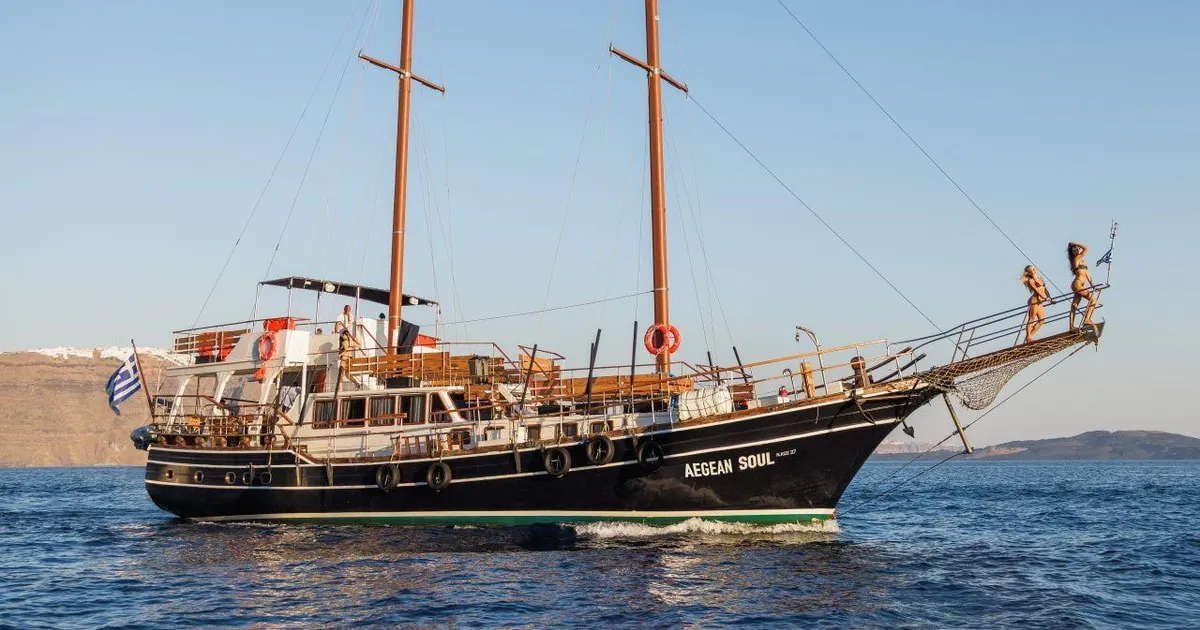 from $35.32
Volcanic Islands Cruise with Hot Springs Visit
The most-booked volcano day: a big boat to the Nea Kameni crater and the hot springs, with longer options adding Thirassia. The €5 volcano fee is paid on top.
Check Availability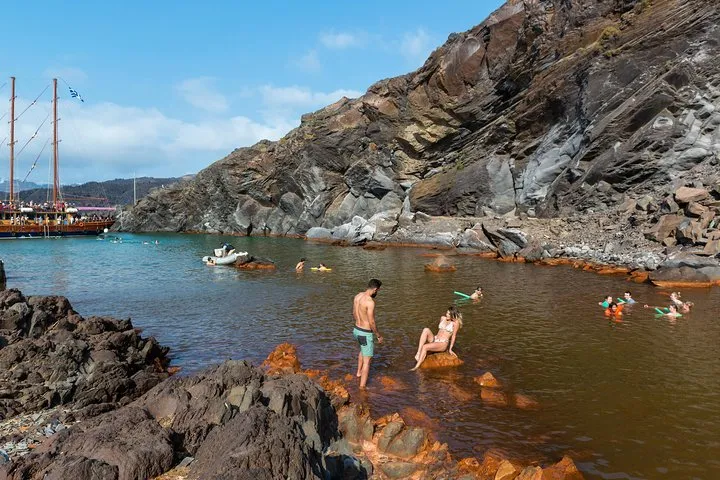 from $34.32
Santorini Volcano and Hot Springs Cruise Tour from Fira Old Port
The classic three-hour boat from Fira Old Port to Nea Kameni: 1.5 hours walking the crater trail, then a swim at the warm springs. The €5 volcano fee is paid on top.
Check Availability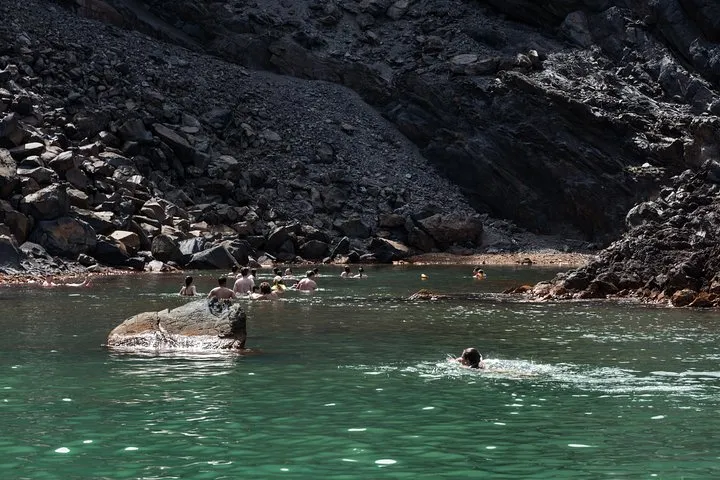 from $40.04
Santorini Caldera Cruise Tour (Volcano, Hot Springs, Thirassia)
Six hours on the water: the Nea Kameni crater walk, the hot springs swim and a stop on Thirassia. Pick-up from Athinios port is an option; the €5 volcano fee is extra.
Check Availability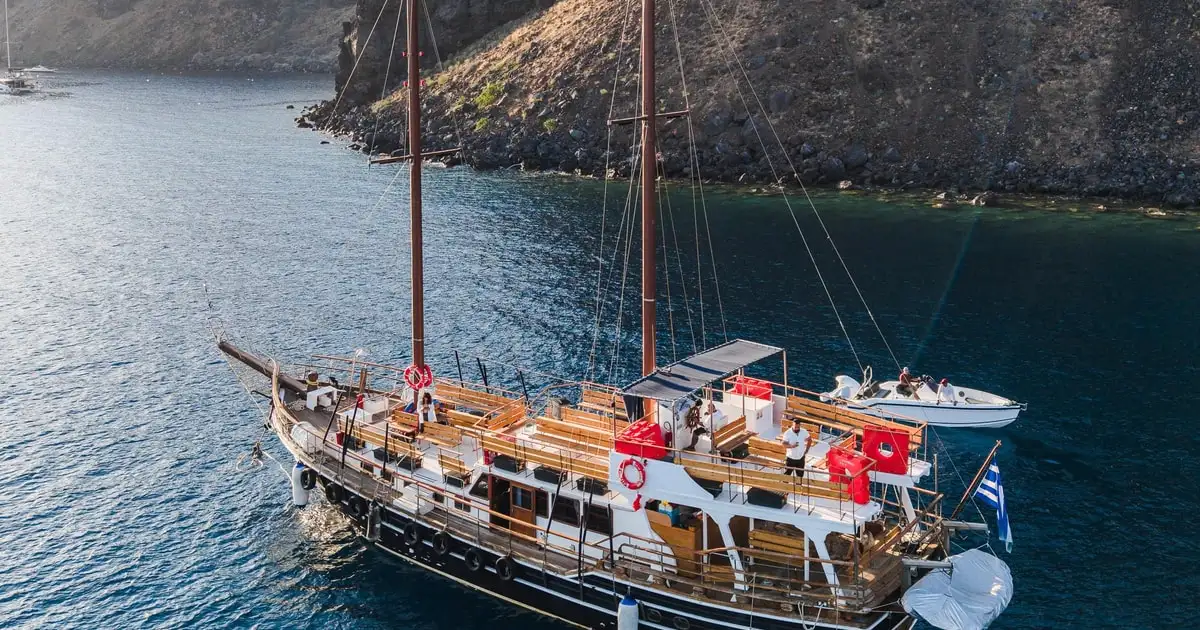 from $31.28
Santorini Port: Cruise to Volcano, Hot Springs & Thirassia
Volcano, hot springs and a Thirassia stop from the port, with pick-up offered; the €5 volcano fee is paid on the island.
Check Availability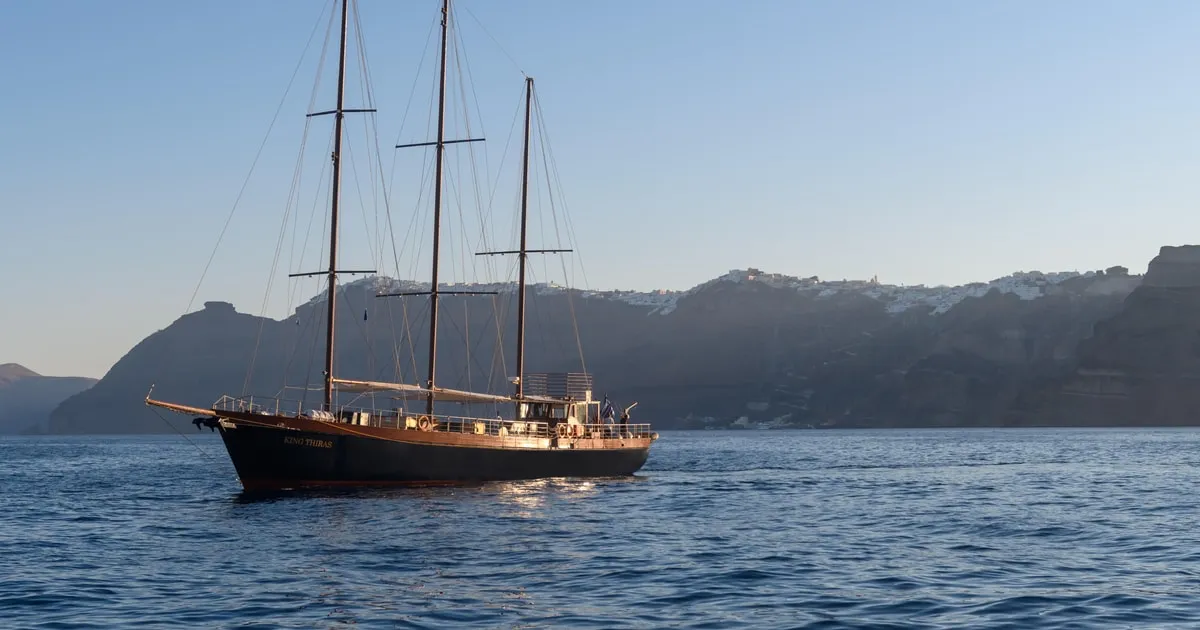 from $57.18
Volcano,Hot Springs,Thirasia Cruise and Oia sunset
A long caldera day: Nea Kameni, the hot springs, Thirassia and the Oia sunset seen from the water.
Check Availability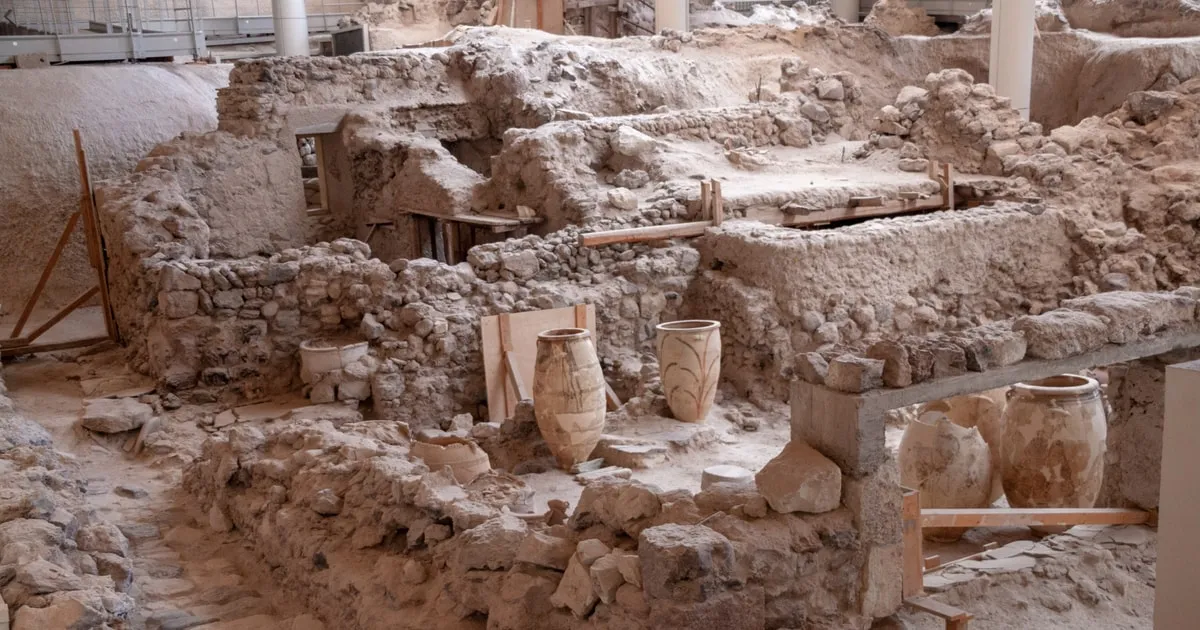 from $29.15
Akrotiri Ticket with Optional Self-Guided Audios
The plain Akrotiri entry ticket with optional self-guided audio on your phone, for walking the excavation at your own pace.
Check AvailabilityPrices, ratings and details are the platform's own. dollar figures are the listed prices — the platform bills in your account's currency.
Questions about the Minoan eruption
When was the last time Santorini volcano erupted?
The last small eruption was in 1950, a lava dome on Nea Kameni. Before that the Kameni islands were built by major eruptions in 1707-1712, 1866-1870, 1925-1928 and 1939-1941. The 2025 earthquake swarm caused no eruption.
What is a caldera volcano?
A caldera forms when a large eruption empties the magma chamber and the ground above collapses, leaving a wide basin, often flooded by the sea. The Minoan eruption created exactly this at Santorini, and the basin is the deep harbour ships sail into today.
What happened to the Minoans after the eruption?
The eruption hit Minoan Crete with ash and tsunamis and damaged its maritime economy, but it did not destroy the civilisation overnight. Minoan palace culture declined over the following centuries and was eventually absorbed by Mycenaean Greeks. The details remain debated.
Is Santorini safe to visit right now?
Yes. The 2025 earthquake swarm subsided in spring and the volcano did not erupt. The island is open and monitored. The emergency number is 112 and Santorini General Hospital runs a 24-hour emergency department.
How much does it cost to see the eruption's evidence?
Akrotiri admission is $22.40 (€20) with a reduced rate of $11.19 (€10). The two Fira museums cost $11.19 (€10) each. Volcano boat tours start from $31.28 to $57.18, plus the €5 volcano park fee paid on the island.
Why is it called the Minoan eruption?
It is named after the Minoan civilisation of Bronze Age Crete, whose world the eruption shook, and whose era the ash layer dates to. The event is also called the Thera eruption, after the island's ancient name.
On Video
Three videos that show the subject before you decide.
Santorini: The Volcano That Shook the Ancient World | Full Documentary
Santorini: The Volcano That Shook the Ancient World | Full Documentary, from Get.factual.
Video: Get.factualThe Disaster That Ended The Minoan Civilisation | BBC Timestamp
The Disaster That Ended The Minoan Civilisation | BBC Timestamp, from BBC Timestamp.
Video: BBC TimestampSantorini - The Thera Cataclysm
Santorini - The Thera Cataclysm, from HTH Videography.
Video: HTH Videography