 Santorini Island Guide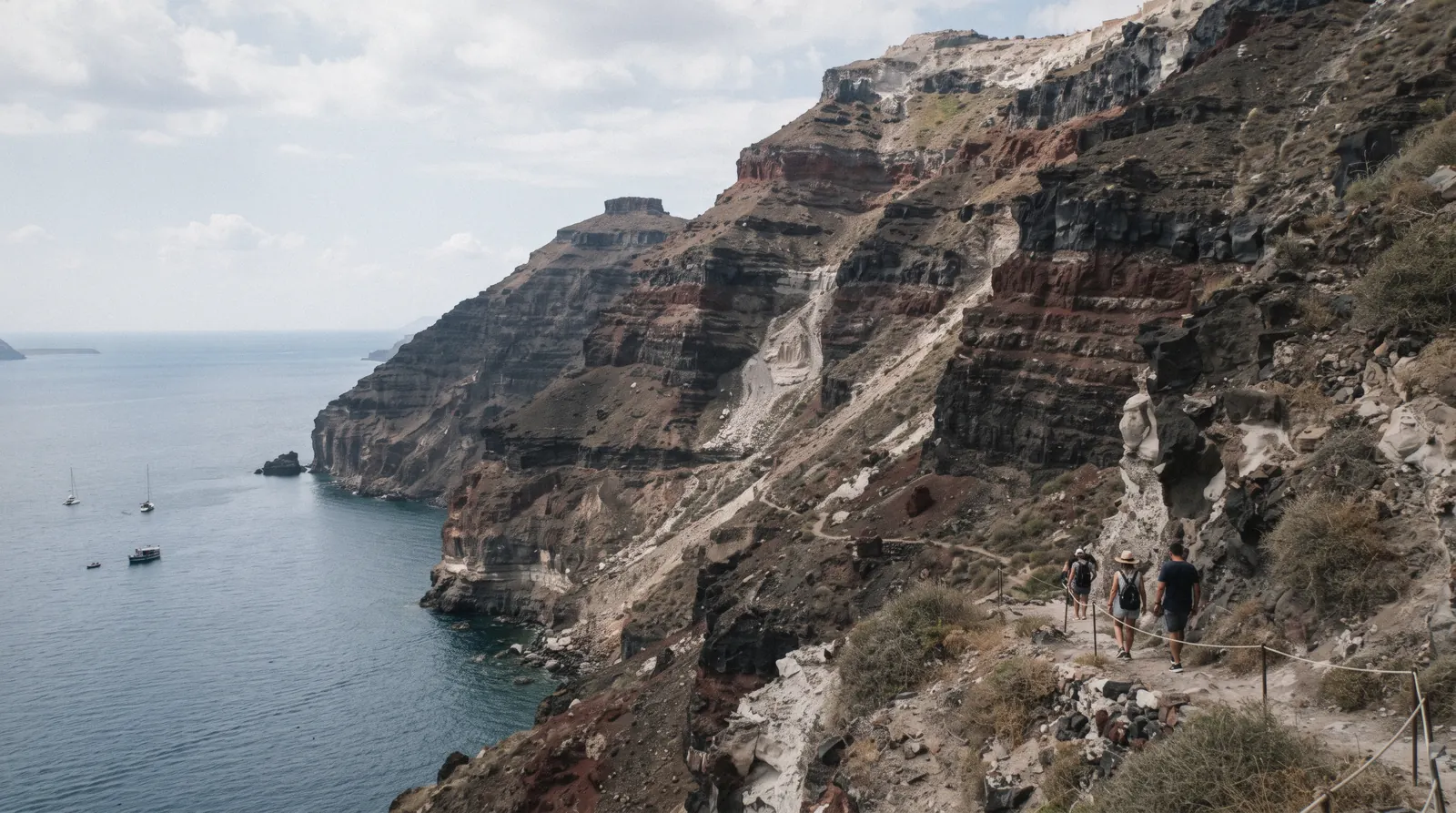
A Santorini earthquake swarm in early 2025 put the island in the world's headlines and emptied its ports for a few weeks. This page explains what actually happened, what the volcano risk is today and how it changes a visit. For the wider practical picture, start with our Santorini planning guide. It is part of our Santorini, Greece travel guide.
Quick answer Safe now, volcano did not erupt
The 2025 Santorini earthquake swarm produced more than 12,800 tremors but no volcano eruption and no confirmed deaths on the island. Activity subsided in spring 2025 and the island reopened to normal travel. The volcano itself remains dormant rather than extinct, which is exactly why the caldera cruises to Nea Kameni run every day.
Key takeaways
- The island was in a state of emergency for five weeks in early 2025, schools closed and many residents left by ferry and plane, then activity faded.
- Red Beach is closed by land after a rockfall triggered by a magnitude 5.0 tremor, see it from above or from a boat tour.
- Our pick for the volcano itself is the volcano and hot springs cruise from Fira Old Port, three hours door to door.
- Read our honest answer to is Santorini safe before you book.
What happened in the 2025 Santorini earthquake swarm
The Santorini earthquake of 2025 was not one event but a swarm of thousands of tremors under the sea between Santorini and Amorgos. Here is the sequence in plain language.
A swarm, not a single quake
From late January 2025 the seabed in the Santorini-Amorgos zone began shaking almost continuously. By mid-February more than 12,800 tremors had been recorded, and the largest reached about magnitude 5.2 to 5.3. Seismologists described the pattern as very unusual for the area, because the quakes came in relentless clusters rather than one main shock with aftershocks.
Most tremors were small and offshore, so damage on the island itself stayed limited. The effect on daily life came from fear of a bigger one, not from collapsed buildings. This is the episode people now type into search as the Santorini earthquake 2025.
- More than 12,800 tremors recorded by mid-February 2025
- Largest quakes about magnitude 5.2 to 5.3, mostly offshore
- The volcano itself did not erupt at any point
The evacuation and the state of emergency
The municipality declared a state of emergency that ran for five weeks in early 2025. Schools closed. Many residents left the island on ferries and extra flights, which is why the word Santorini evacuation became a headline. Ferry companies added capacity and the ports worked overtime moving families out.
Then the swarm simply faded. Activity subsided through spring 2025 and people moved back. There was no Santorini volcano eruption, no tsunami and no destruction of the villages. Anyone who booked travel for later in 2025 landed on an island operating normally, with one important exception that the section below covers.
Why this island shakes at all
Santorini sits in the Hellenic volcanic arc, where the African plate slides under the Aegean. The flooded caldera, the hot springs and the young lava islands of Nea and Palea Kameni are all products of that same machinery. Earthquakes and volcanism come as a package here, and the 2025 swarm appears to have been tectonic, driven by faults in the crust rather than magma on the move.
That matters for travelers. A tectonic swarm can produce scary numbers without producing lava, which is what the island experienced. If you want the geology told in stone, the Museum of Prehistoric Thera in Fira displays frescoes and finds from the town the last great eruption buried.
Santorini earthquake damage and what is still closed
Damage from the 2025 swarm was limited, but one famous spot on the south coast has stayed off limits. Plan around these closures.
Red Beach is closed by land
Red Beach, the iron-red cove below the Akrotiri cliffs, has had access restrictions because of rockfall danger since 2013, with a mayoral decision banning passage on the land path from 2017. After a magnitude 5.0 earthquake in early 2025 a rockfall hit the beach and the authorities closed it again, and later reports say it is reachable only by boat.
The practical fix is easy. The viewpoint above the beach still shows the whole cove, and many caldera boats pass it from the water. Our pick is to see Red Beach from a boat on the south coast route, which is the angle it photographs best anyway. Read the full situation on our Red Beach page.
| Place | Status after the 2025 swarm | How to see it |
|---|---|---|
| Red Beach | Land path closed by the municipality for rockfall | From the viewpoint above or from a boat |
| Akrotiri excavation | Open, roofed site with normal ticketing | Entrance $22.40 (€20), reduced $11.19 (€10) |
| Fira and Oia caldera rim | Open, no damage reported | On foot on the rim path |
| Nea Kameni volcano | Open, €5 park fee paid on the island | By boat from Fira Old Port or Athinios |
| Ancient Thera on Mesa Vouno | Open in season, closed Wednesdays | Entrance $11.19 (€10), summer 08:30-15:30 |
Everything else runs normally
The sites, buses and boats all returned to normal schedules after the swarm subsided. The Akrotiri excavation kept its seasonal hours, the cable car in Fira kept running every 20 minutes in season, and the KTEL buses kept their hub at Fira station. The KTEL fare table still shows most routes at $2.46 (€2.20) and the port and Perissa runs at $3.02 (€2.70).
Two practical notes. First, the mangement of rockfall risk on the cliffs is ongoing, so respect any signed barrier near the caldera walls and the south coast. Second, cable car fares were raised from the 2017 to 2024 level, so ignore old blog prices. The current one-way fare is $11.19 (€10), with children and luggage at $5.59 (€5).
Santorini volcano eruption history from the Minoan blast to 1950
Searches for a Santorini volcano eruption usually mix up two very different events, the Bronze Age catastrophe and the small lava eruptions since. Here is the timeline.
The Minoan eruption, circa 1600 BC
The event that shaped everything was the Theran or Minoan eruption of circa 1600 BC, a VEI 7 plinian blast that ejected an estimated 28 to 41 cubic kilometres of dense-rock equivalent and collapsed the centre of the island into the sea. It buried the Bronze Age town at Akrotiri under metres of ash, which preserved multi-storey houses, sewers and wall paintings. It ranks among the largest volcanic events in human history.
One detail tells you how fast it happened and how many survived. Only a single gold object, a golden goat found in 1999, and no unburied human remains have been found at Akrotiri. The town was evacuated before the eruption struck. The site today is a roofed city of streets, $22.40 (€20) to enter, and it is the single best place on the island to feel what the volcano can do.
Two thousand years of small eruptions
The Kameni islands in the middle of the caldera were built by eruptions spread over more than two millennia, each one adding another lava dome to the growing reef. Major eruptive phases came in 1707 to 1712, 1866 to 1870, 1925 to 1928 and 1939 to 1941. The last small eruption was in 1950, when a lava dome rose on Nea Kameni.
Nea Kameni today is an uninhabited lava island about 2 km across, with a park fee of $5.59 (€5) paid on the island on top of most boat tickets. A boat drops you at a jetty, a trail climbs to the crater rim and steam still leaks from the rocks. It is dormant, not dead, and walking it is the most direct lesson in the island's geology you can buy.
| When | Event | What it left behind |
|---|---|---|
| Circa 1600 BC | Minoan eruption, VEI 7 | Caldera collapse, Akrotiri buried under ash |
| 1707-1712 | Major Kameni eruption | New lava domes in the caldera |
| 1866-1870 | Major Kameni eruption | Growth of Nea Kameni observed across Europe |
| 1925-1928 | Major Kameni eruption | Further lava flows in the caldera |
| 1939-1941 | Eruptive phase | New domes on Nea Kameni |
| 1950 | Last small eruption | A lava dome, the volcano's most recent activity |
| 2025 | Earthquake swarm, no eruption | Five-week state of emergency, limited damage |
What a Santorini earthquake 1500 BC search really finds
Queries for a Santorini earthquake 1500 BC point at the same Minoan catastrophe, since the eruption is dated to the 16th or late 17th century BC. There is no separate famous quake from that era in the record we use, the destruction at Akrotiri was volcanic. If you want that story in artefacts, the frescoes and pottery moved off the site sit in the Museum of Prehistoric Thera in Fira, $11.19 (€10) and closed Tuesdays, with a second classical collection at the Archaeological Museum of Thera at the same price.
Pair the museum with the excavation in one day. The bus from Fira to Akrotiri village costs $2.46 (€2.20) and takes you to within a short walk of the site entrance.
Is it safe to visit Santorini now
This is the question every searcher asks after a swarm. The honest answer is yes for ordinary travel, with the same small cautions any Greek island requires.
The current situation
The 2025 swarm subsided and normal tourism resumed on the island. The volcano did not erupt, the villages stand intact and the airport, the port of Athinios and the cruise tenders at the Old Port all operate as before. Scientists monitor the caldera continuously, which is precisely why a swarm produced an evacuation of residents rather than casualties. Being watched is the safety net here.
What no page can promise is that earthquakes will never happen again. Santorini is an active volcanic island and the faults around it move. The rational position is to book the trip, know that a remote risk exists and know what to do if the ground moves. Our full checklist lives on is Santorini safe.
What to do if the ground shakes
Greek civil-protection advice is the same as anywhere in a quake zone. If you feel shaking indoors, drop, take cover under something solid and hold on, then leave by stairs once it stops. Outdoors, move away from cliffs, and on Santorini that means the caldera edge, where the drop is hundreds of metres in places.
Keep three numbers and one habit. The emergency number is 112 and it reaches police, ambulance and fire from any phone. The Santorini General Hospital in Karterados runs a 24-hour emergency department on +30 22860 35300. The habit is to skip the caldera rim path and the cliff-side viewpoints for a few hours after any strong tremor, because loose rock on the crater walls is the real local hazard, as Red Beach proved.
- Emergency number 112, police, ambulance and fire, any phone
- Santorini General Hospital, Karterados, 24-hour emergency department, +30 22860 35300
- After a strong tremor, stay off the caldera rim and the cliff paths
- Follow official Greek civil-protection announcements, not hotel gossip
How a swarm would affect a booked trip
If a new swarm ever starts, the practical effects are known from 2025. Ferries and flights added capacity, schools closed and residents left, while the sites and hotels kept working for whoever stayed. Travel insurance and flexible tickets are therefore worth more than panic. Book refundable rates where you can, especially in the quieter months, and keep tour bookings on free-cancellation terms, which most caldera cruises offer up to 24 hours ahead.
The other lesson from 2025 is about shape, not danger. A swarm closes nothing but confidence. The villages, the caldera views and the beaches are all still there when the tremor counters go quiet.
The volcano today: risk, monitoring and what travelers see
Is the Santorini volcano still erupting? No. Here is what the volcano actually is today and how close you can safely get to it.
Dormant, monitored and visitable
The volcano is dormant, meaning no eruption since the 1950 lava dome on Nea Kameni, but not extinct, since the system produced eruptions repeatedly over the last two thousand years. It is one of the most closely watched volcanoes in Europe, with monitoring networks watching ground deformation and seismicity continuously. That vigilance is exactly what turned the 2025 swarm into an evacuation instead of a tragedy.
For a visitor the volcano is a day trip, not a danger zone. Boats leave from Fira Old Port, Athinios and the Oia side for the crater walk and the warm springs. The full picture is on our Santorini volcano page and the booking details on Santorini volcano tour.
The crater walk and the hot springs
Nea Kameni is a raw lava field about 2 km across, black and pathless in every direction except the marked trail. The classic three-hour trip from Fira Old Port gives you about 1.5 hours on the crater trail with a guide, then moves to a bay off Palea Kameni where boats anchor offshore and you swim into warm, iron-rich water that stains light swimwear. The water temperature is not officially published, so take the warm part on trust and the orange stains as proof.
Bring real shoes, a hat and water, because the island has no shade and the €5 park fee, listed by operators as $5.64, is paid in cash on the jetty. The springs themselves deserve their own read on our Santorini hot springs page.
Which boat to pick
Match the boat to the day you want. A short three-hour trip from Fira Old Port covers the crater and the springs and leaves the afternoon free. A six-hour version adds a stop on Thirassia, the inhabited island on the west rim of the caldera. A full-day option wraps the volcano, the springs, Thirassia and the Oia sunset seen from the water.
Our pick for most trips is the short cruise from Fira Old Port, because the crater walk is the part you came for and the afternoon is better spent walking the rim path north. If you only have one long day, take the version with the sunset. The comparison table below splits them properly.
Planning a Santorini trip after the earthquakes
Nothing about booking Santorini changed after 2025, but a few decisions deserve a second look. Costs, timing and insurance, all in one place.
What the island costs, quake or no quake
Prices did not move because of the swarm, but they are easy to get wrong from old blogs. The fixed costs you will actually meet: Akrotiri $22.40 (€20), Ancient Thera $11.19 (€10), both Fira museums $11.19 (€10), the cable car one way $11.19 (€10) and the KTEL bus $2.46 (€2.20) on most routes. Add the volcano park fee of $5.59 (€5) if you take a crater boat.
Two fees surprise people. The cruise passenger fee is charged through the cruise line, €20 per passenger in June to September, €12 in April, May and October and €4 the rest of the year. The climate resilience fee is paid at your hotel, per room per night from April to October, from €2 in simple rooms up to €15 for five-star properties and villas, with €8 for short-term rentals. The full breakdown is on is Santorini expensive.
When to go and how flexible to be
The swarm faded in spring, which is also the season we rate most highly anyway. April and May bring green hillsides, sea around 17.7 to 19.3 degrees and hotel rates before the peak. June to September is the busy, hot, windy core, when the July and August meltemi regularly cancels small boat trips, so build a spare day into any volcano plan. October keeps the sea at 23.1 degrees with far fewer people.
Month by month numbers live on our Santorini weather page and the seasonal argument on best time to visit Santorini. Our pick for a geology-focused trip is late spring, when the crater boats run full schedules but the rim path is not yet a queue.
Bookings, insurance and peace of mind
Treat flexibility as part of the price. The caldera cruises listed here all offer free cancellation up to 24 hours before departure, so book early and cancel late without cost. Prefer refundable hotel rates in the quiet months, and read what your travel insurance says about natural events before you go rather than after.
One booking rule worth keeping. Volcano boats and Santorini tours in July and August fill days ahead, and the last thing you want after paying for a week is to miss the crater because every departure sold out. Reserve the boat for early in your stay, so weather cancellations still leave you a second chance.
Seeing the volcano story across the island
The earthquake and the eruptions wrote the whole island. These are the places where the story is visible, and none of them need a guide to understand.
The caldera rim on foot
The cliff edge from Fira through Firostefani and Imerovigli to Oia is the lip of the collapsed volcano, about 10 km of path by our estimate, three to five hours of walking. Every step looks down into the flooded crater and across at Nea Kameni, the visible reminder that the volcano is still there. Skaros Rock at Imerovigli juts from the rim, once the site of the medieval castle-town that guarded this coast.
Start early, take water and wear shoes with grip, because the path is paved in parts and dirt in others. The full route guide is on Fira to Oia hike, with village stops in Fira, Imerovigli and Firostefani.
Akrotiri, the town the volcano preserved
Akrotiri is the argument for caring about all this. A Bronze Age town of multi-storey houses with sewers and painted walls, buried by the eruption of circa 1600 BC and excavated since 1967, first by Spyridon Marinatos and then by Christos Doumas. You walk on timber walkways through a roofed city of three thousand years old, closed only Mondays and Thursdays in the afternoon, entrance $22.40 (€20).
After the excavation, the same coast explains itself. Red Beach glows red below unstable volcanic cliffs, and the Akrotiri lighthouse sits on the lava and ash of the southwest tip. The bus from Fira is $2.46 (€2.20). Tickets and entry details are on Akrotiri tickets.
Museums, black sand and the east coast
Two Fira museums finish the story indoors. The Museum of Prehistoric Thera holds the frescoes and finds from Akrotiri, the best of them the wall paintings that never left the island. The Archaeological Museum of Thera covers the classical eras after the volcano, both at $11.19 (€10).
On the east coast the volcano built different terrain. The long black-sand beaches at Perissa and Kamari are eroded lava and pumice, with the Dorian city of Ancient Thera on the 360-metre ridge of Mesa Vouno between them, $11.19 (€10) to enter, closed Wednesdays, an average visit of 1.5 hours per the site's own page. A swim under a volcano's debris field is a better souvenir than any magnet.
Volcano and hot springs cruises compared
The five main boat options for seeing the volcano, the hot springs and the caldera after the 2025 earthquakes, with prices, durations and what each one includes.
How much of your day does the volcano deserve?
| Option | Price | Length | Includes | Book |
|---|---|---|---|---|
| Santorini Port: Cruise to Volcano, Hot Springs & ThirassiaCruise passengers and anyone short on time | from $31.28 | 4 - 6 hours | Volcano, hot springs and Thirassia, pick-up available, €5 volcano fee paid on the island | Check Availability |
| Santorini Volcano and Hot Springs Cruise Tour from Fira Old PortOur pick for most travelers, the short and simple crater trip | from $34.32 | 3 hours | Guided crater walk of 1.5 hours, hot springs swim, boat from Fira Old Port, volcano fee extra | Check Availability |
| Volcanic Islands Cruise with Hot Springs VisitBig-boat travelers who want the most-booked option | from $35.32 | 4 - 10 hours | Nea Kameni crater and hot springs, longer options add Thirassia, pick-up available, fee paid on top | Check Availability |
| Santorini Caldera Cruise Tour (Volcano, Hot Springs, Thirassia)Half-day travelers who also want Thirassia | from $40.04 | 6 hours | Crater walk, springs swim and Thirassia stop, guided, pool noodles for swimming, Athinios pick-up option | Check Availability |
| Volcano,Hot Springs,Thirasia Cruise and Oia sunsetOne-long-day visitors who want the sunset too | from $57.18 | 7 - 10 hours | Nea Kameni, hot springs, Thirassia and the Oia sunset from the water, pick-up available | Check Availability |
All five offer free cancellation up to 24 hours ahead per their listings. The €5 volcano park fee is paid on the island on top of most boat tickets. Figures current in Q4 2026.
Volcano boats and caldera cruises
Every boat here reaches Nea Kameni and the warm springs, so the only real choice is how many hours you give the caldera.
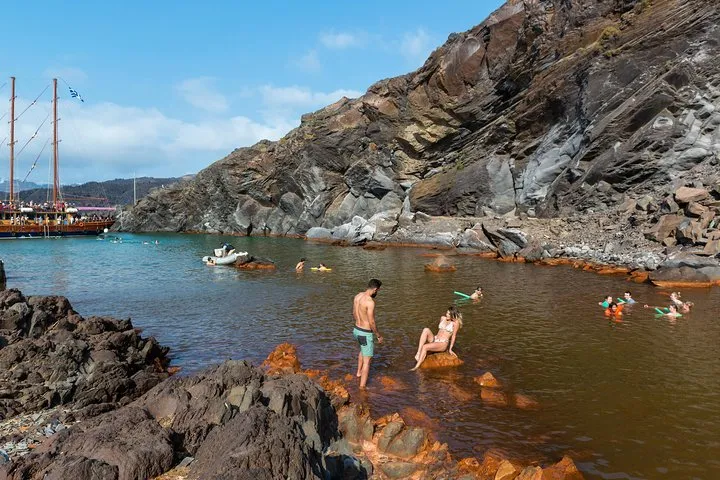 from $34.32
Santorini Volcano and Hot Springs Cruise Tour from Fira Old Port
The classic three-hour boat from Fira Old Port to Nea Kameni: 1.5 hours walking the crater trail, then a swim at the warm springs. The €5 volcano fee is paid on top.
Check Availability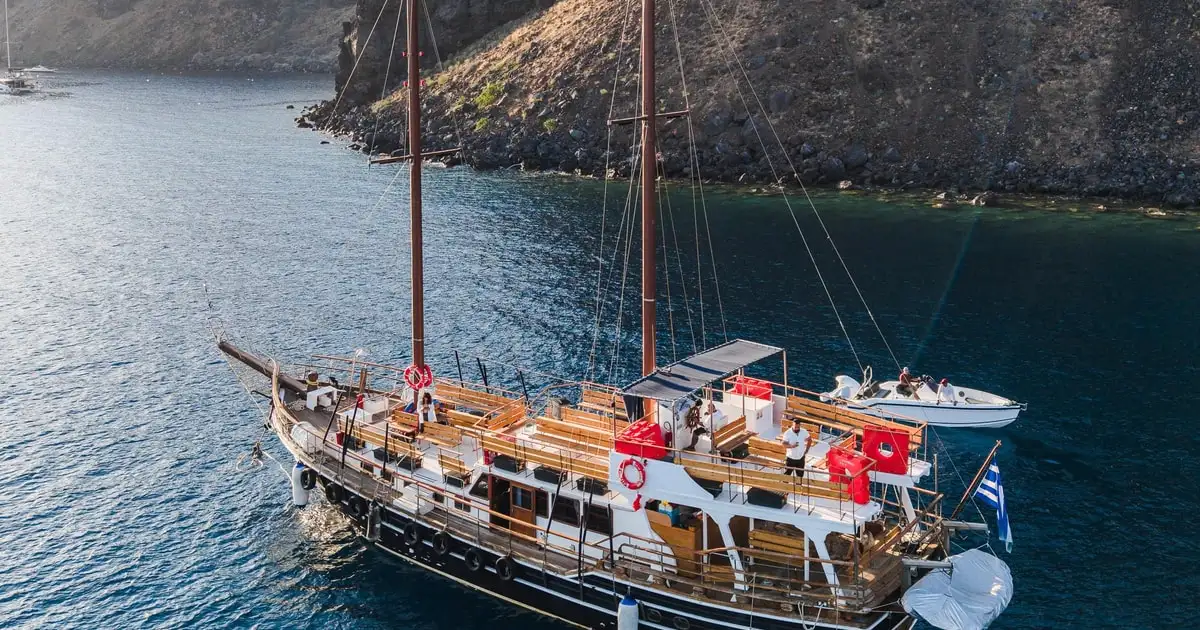 from $31.28
Santorini Port: Cruise to Volcano, Hot Springs & Thirassia
Volcano, hot springs and a Thirassia stop from the port, with pick-up offered; the €5 volcano fee is paid on the island.
Check Availability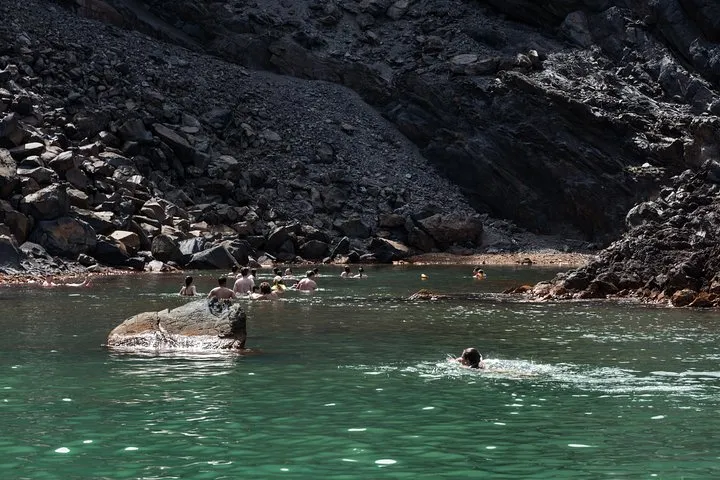 from $40.04
Santorini Caldera Cruise Tour (Volcano, Hot Springs, Thirassia)
Six hours on the water: the Nea Kameni crater walk, the hot springs swim and a stop on Thirassia. Pick-up from Athinios port is an option; the €5 volcano fee is extra.
Check Availability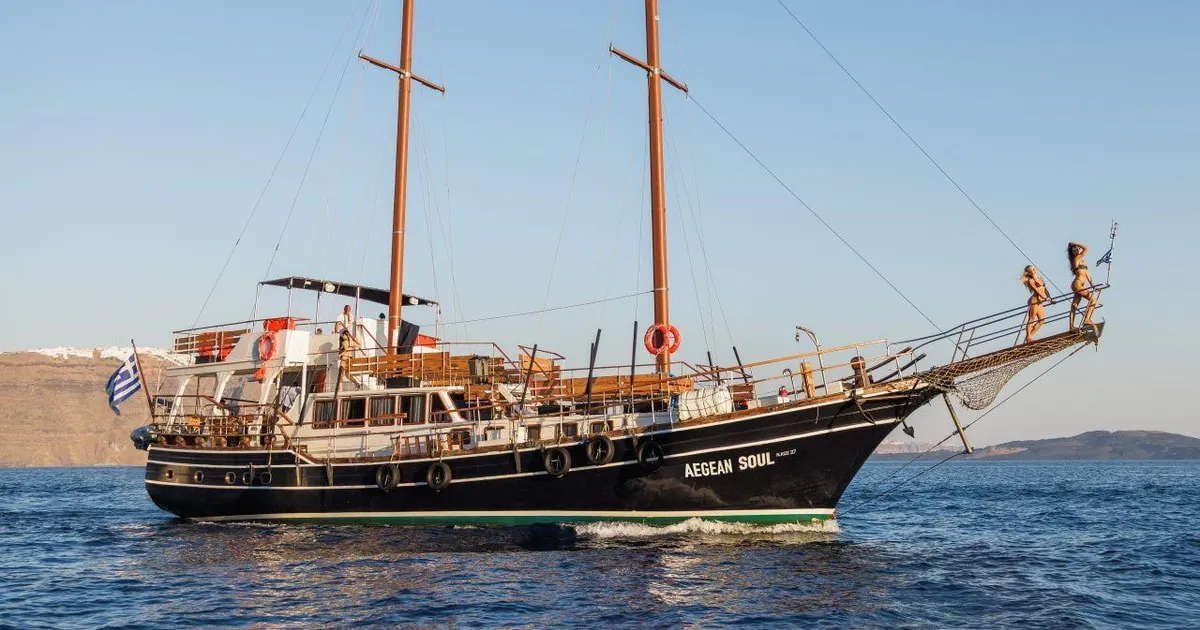 from $35.32
Volcanic Islands Cruise with Hot Springs Visit
The most-booked volcano day: a big boat to the Nea Kameni crater and the hot springs, with longer options adding Thirassia. The €5 volcano fee is paid on top.
Check Availability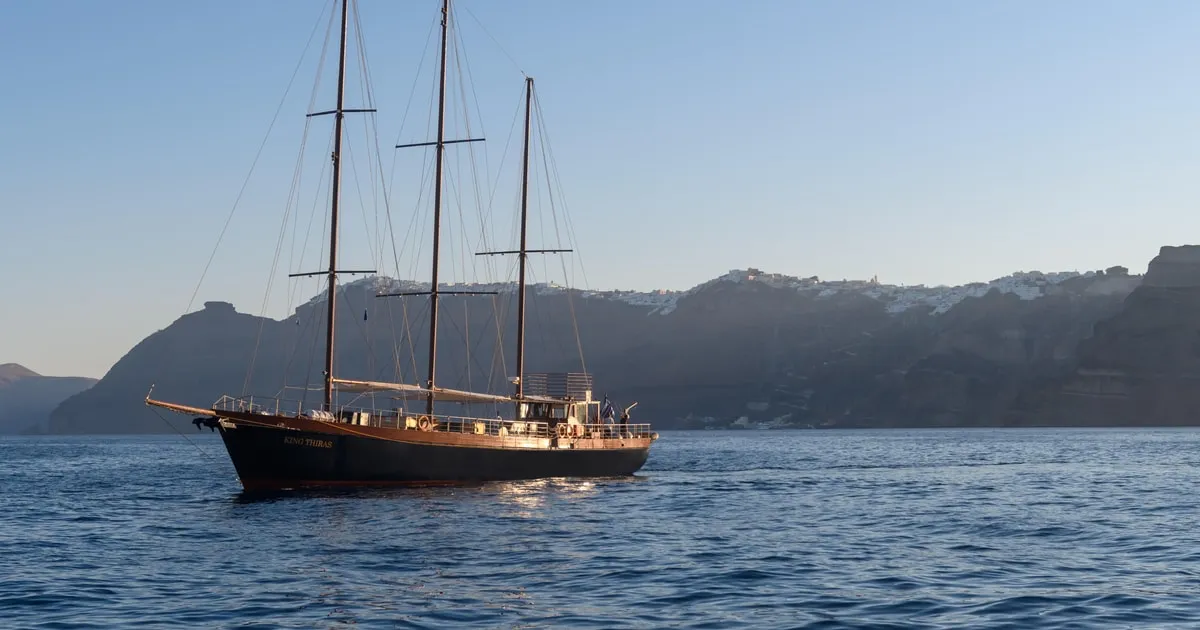 from $57.18
Volcano,Hot Springs,Thirasia Cruise and Oia sunset
A long caldera day: Nea Kameni, the hot springs, Thirassia and the Oia sunset seen from the water.
Check AvailabilityPrices, ratings and details are the platform's own. dollar figures are the listed prices — the platform bills in your account's currency.
Volcano, caldera and the closed beach on the map
The pins that matter after the 2025 swarm, from the crater island in the caldera to the south coast where the land path stays closed.
- 1 Nea Kameni volcanoThe dormant crater island, €5 park fee paid on the jetty, reached only by boat.
- 2 Palea Kameni hot springsWarm iron-rich bay where boats anchor offshore and you swim in.
- 3 FiraThe capital on the caldera rim at about 220 m, hub for buses and the volcano boats.
- 4 OiaThe northern tip village, sunset point and departure side for some cruises.
- 5 Akrotiri excavationThe Bronze Age town buried by the Minoan eruption, roofed and open to visitors.
- 6 Red BeachLand path closed by the municipality for rockfall after the 2025 earthquake.
- 7 Skaros RockMedieval castle rock on the caldera rim at Imerovigli, free to climb.
Numbers match the pins on the map.
Nearby on the island
Places that pair naturally with the volcano and earthquake story, all within a short bus ride of Fira.
Akrotiri
The town the Minoan eruption preserved under ash, now a roofed excavation. Combine it with Akrotiri tickets for hours, prices and how to skip the midday crowds.
About 25 min by bus from Fira (our estimate) Read the guideRed Beach
The red cove closed to walkers since the 2025 rockfall. See it from the viewpoint above or from the water, as many Santorini boat tours do.
About 30 min by bus from Fira (our estimate) Read the guideThirassia
The inhabited rim of the volcano on the far side of the caldera. Several volcano cruises stop here, and the climb to the village is the quietest walk on the island.
About 20 min by boat from the caldera (our estimate) Read the guideMuseum of Prehistoric Thera
The frescoes and finds from Akrotiri, the human story of the great eruption. Closed Tuesdays, $11.19 (€10), and the best rainy-hour plan on the island.
In Fira, a few minutes on foot Read the guideSantorini earthquake and volcano questions
Is it safe to visit Santorini now?
Yes for normal travel. The 2025 swarm subsided, the volcano did not erupt and the island runs on its usual schedules. Keep the emergency number 112 to hand and stay off the caldera rim and cliff paths for a few hours after any strong tremor. Our fuller checklist is on is Santorini safe.
Is the Santorini volcano still erupting?
No. The last small eruption was in 1950, when a lava dome rose on Nea Kameni. Earlier eruptive phases came in 1707 to 1712, 1866 to 1870, 1925 to 1928 and 1939 to 1941. The volcano is dormant and monitored, and you can walk the crater on a volcano tour any day in season.
What caused the Santorini earthquake 2025?
A tectonic swarm in the Santorini-Amorgos zone, faults moving under the sea rather than magma rising. More than 12,800 tremors were recorded by mid-February 2025, the largest about magnitude 5.2 to 5.3, and activity faded through spring. The volcano itself stayed quiet throughout the swarm.
Did people evacuate Santorini?
Many residents did. The municipality declared a state of emergency lasting five weeks in early 2025, schools closed and thousands of residents left on ferries and extra flights. The evacuation was precautionary, damage on the island stayed limited and people returned once the swarm subsided.
What was the damage from the Santorini earthquake?
Damage was limited because the tremors were mostly small and offshore. The clearest consequence for visitors is Red Beach, where a magnitude 5.0 quake triggered a rockfall and the land path stayed closed. Sites, hotels, buses and boats all operate normally, which the comparison table above shows.
Could the volcano erupt again?
The Kameni islands were built by eruptions over more than two millennia, so the system is active, only dormant. A repeat of the Minoan eruption of circa 1600 BC is a geological event, not a holiday risk, and the volcano is continuously monitored. Any renewed activity would be announced well before a visitor needed to react.
Can you still visit the volcano crater and hot springs?
Yes, by boat. Trips run from Fira Old Port, Athinios and the Oia side to the Nea Kameni crater trail and the warm springs off Palea Kameni. The park fee of $5.59 (€5) is paid on the island on top of most tickets. The three-hour cruise from Fira Old Port is our pick for a first visit.
Is Red Beach open after the earthquake?
Not by land. The path has been closed by the municipality for rockfall danger, tightened after the 2025 quake, and the beach is reported as reachable only by boat. See it from the viewpoint above the cove or from a passing boat, which is how most caldera cruises include it.
Earthquake & Volcano Risk On Video
Three videos that show the place before you go.
Thousands flee as earthquakes rattle Greek island of Santorini
Thousands flee as earthquakes rattle Greek island of Santorini, from NBC News.
Video: NBC NewsSantorini Earthquakes, A Ticking Timebomb In Disguise
Santorini Earthquakes, A Ticking Timebomb In Disguise, from Insane Curiosity.
Video: Insane CuriosityDEADLY Volcano Beneath Santorini | Countdown to Armageddon | History
DEADLY Volcano Beneath Santorini | Countdown to Armageddon | History, from HISTORY.
Video: HISTORYVideos load from YouTube only when you press play.
Prices, hours and terms are set by the venue or operator and confirmed at checkout.
We may earn a commission if you book through one of our links, at no extra cost to you. Full affiliate disclosure